Ready to green your grey infrastructure? Discover Ecoreef →
1,333,018 Meters OF MARINE BARRIERS AND COUNTING  LIVE
LIVE
Solutions for marine pollution control, coastal and shoreline protection to effectively address environmental concerns.
View All Products
Solutions for the protection of critical infrastructure and other high-security areas.
View All Products
End-to-end solutions for environmental protection, safety and security applications that protect, monitor and regenerate marine environments.
View All Solutions
End-to-end marine and engineering services designed to ensure high-performing projects.
View All Services
Industry-focused expertise delivering proven solutions for coastlines and waterways, from initial concept to long-term operation and protection.
View All Industries

Solutions for marine pollution control, coastal and shoreline protection to effectively address environmental concerns.
View All Products
Solutions for the protection of critical infrastructure and other high-security areas.
View All Products
End-to-end solutions for environmental protection, safety and security applications that protect, monitor and regenerate marine environments.
View All Solutions
End-to-end marine and engineering services designed to ensure high-performing projects.
View All Services
Industry-focused expertise delivering proven solutions for coastlines and waterways, from initial concept to long-term operation and protection.
View All Industries

Share:


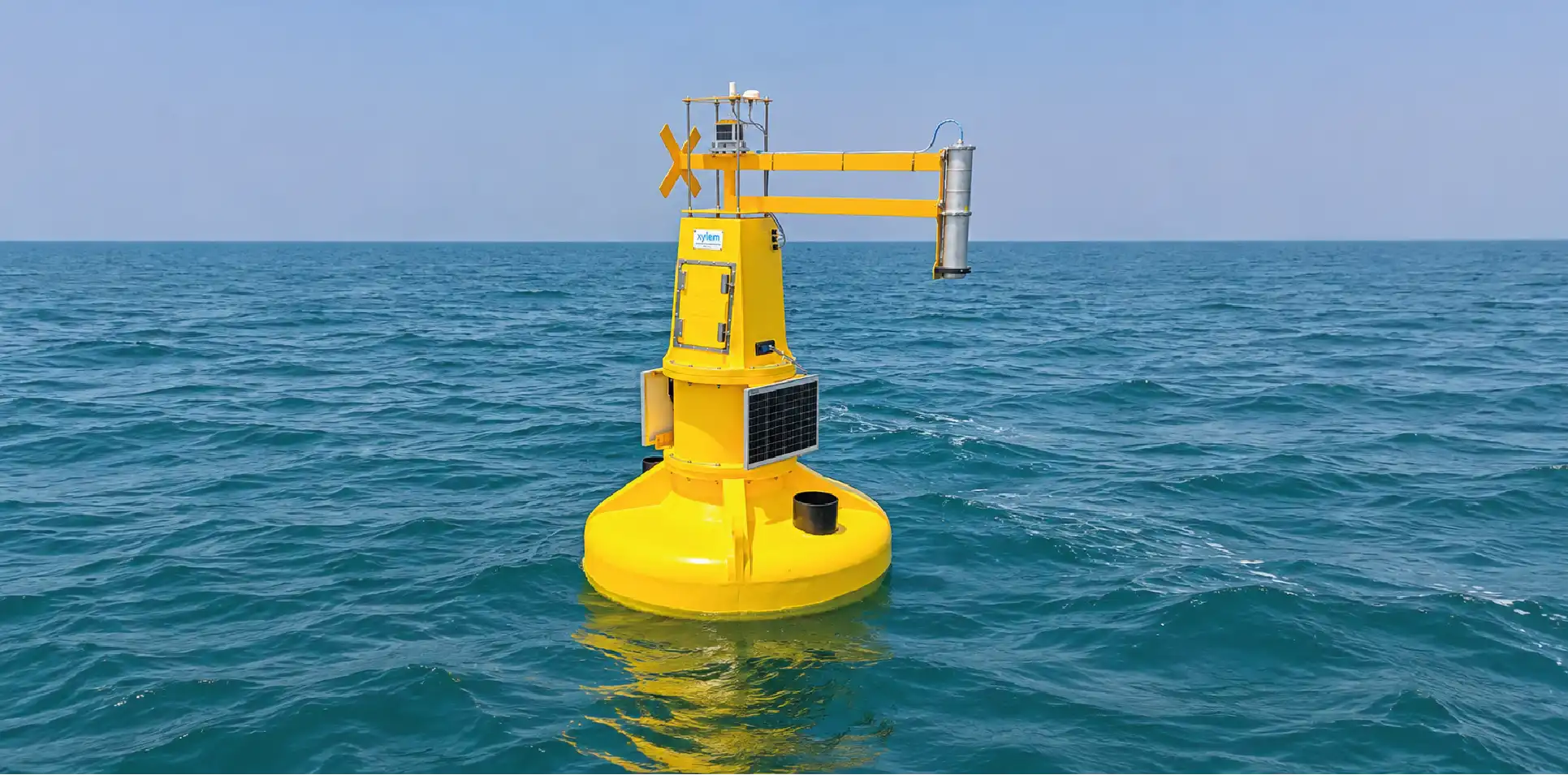
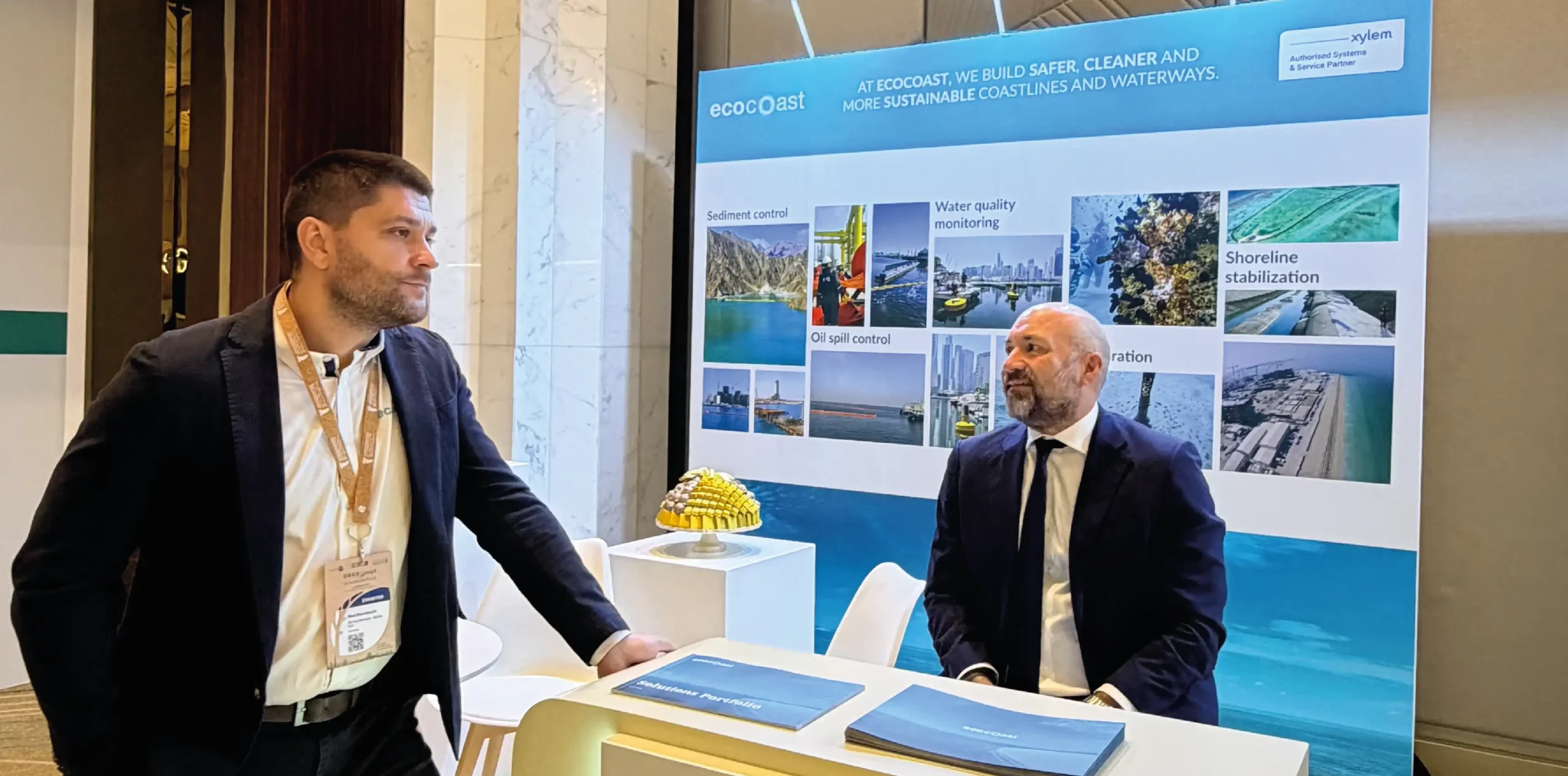
Environmental monitoring in the GCC changes with this appointment: Ecocoast is now Xylem‘s Authorised Systems and Service Partner for the region. In practice, that means environmental monitoring systems built on Xylem YSI and Aanderaa sensing are now integrated, deployed, calibrated and serviced from within the region – across the UAE, Saudi Arabia, Bahrain, Kuwait, Oman and Qatar – rather than shipped in and supported from overseas by a team that is often already on the site.
The technology was never what this market lacked. What was missing is a partner who integrates it, services it, and is already working in the same water.
Ask anyone specifying a monitoring program for a Gulf port, marina or coastal development what worries them, and it’s rarely the instrument. Xylem’s YSI and Aanderaa instruments are used in water bodies worldwide and their performance is well documented.
What worries them is month fourteen. A pH sensor reaches end of life and the replacement takes six weeks to arrive. Calibration standards run out. Biofouling goes unmanaged through a Gulf summer and the turbidity readings drift without anyone noticing. A datalogger fails and the nearest engineer who has seen one is on another continent.
Monitoring programs rarely fail at commissioning. They fail quietly in year two, when the data is still arriving but is no longer trustworthy.
The phrase appears in a lot of regional marketing. Here’s what it covers in this case.
Assembly and integration. Sensor payloads, dataloggers, telemetry and power systems are built into the buoy platform at our own facilities in Umm Al Quwain (UAE) and Yanbu (KSA), not received as a sealed unit.
Configuration and testing. Systems are configured for the site and tested before they go out, so commissioning day is a verification rather than a first attempt.
Calibration. Scheduled calibration against traceable standards, carried out in the region, including annual maintenance contract calibrations for clients running multiple systems.
Repair and reconfiguration. Sensor repair and platform reconfiguration handled here – work that would otherwise mean crating an instrument and waiting.
The test of a monitoring partner is not whether the system works on the day it’s installed. It’s whether the data is still trustworthy a summer later.
There’s a second difference, and for most projects it matters more than the service network. An instrument supplier arrives, installs a buoy and leaves. We’re frequently on the same site already, running the containment the monitoring is measuring.
That turns two separate purchases into one system.
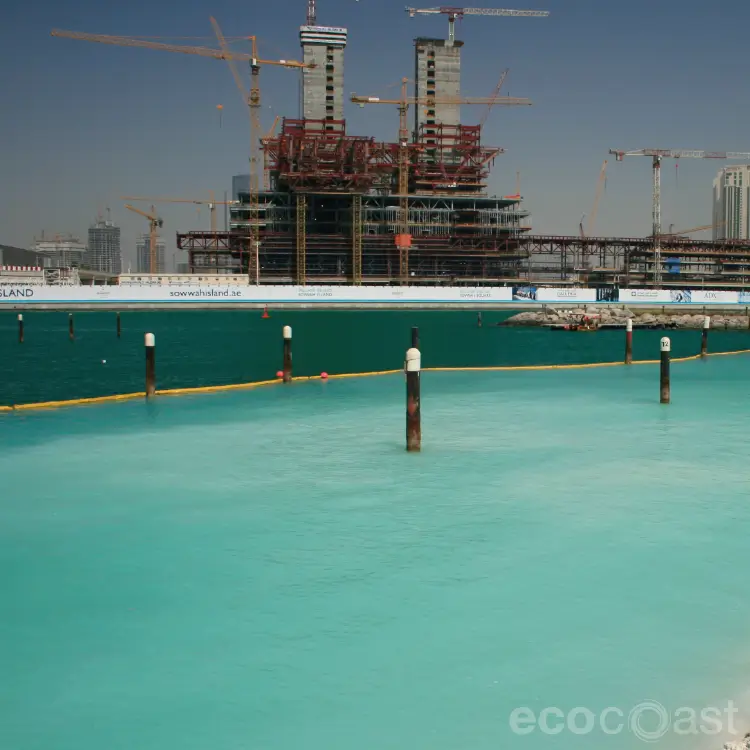
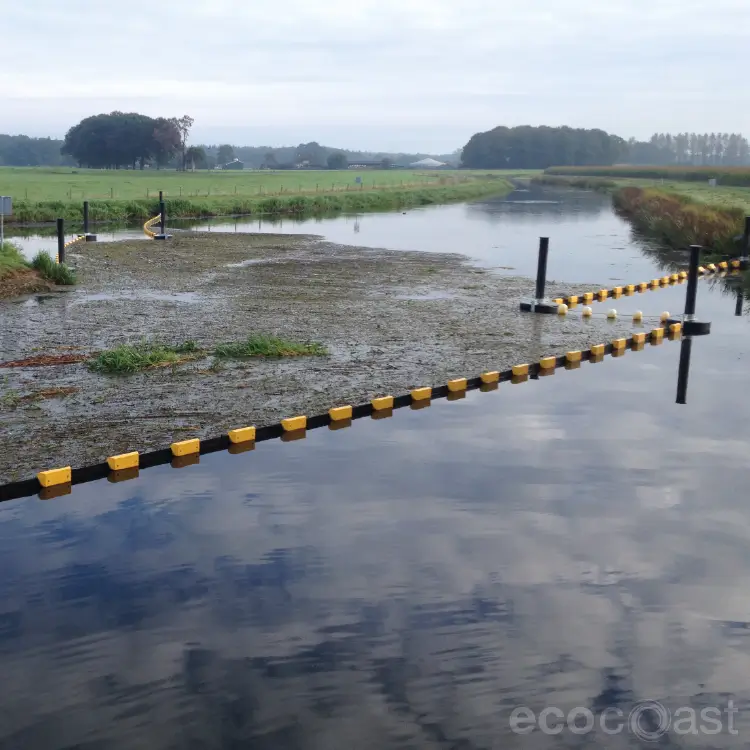
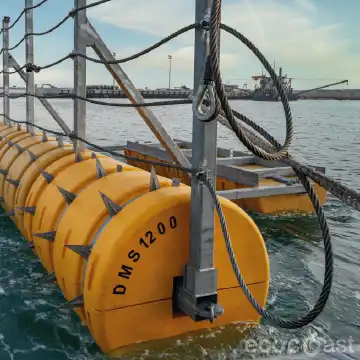
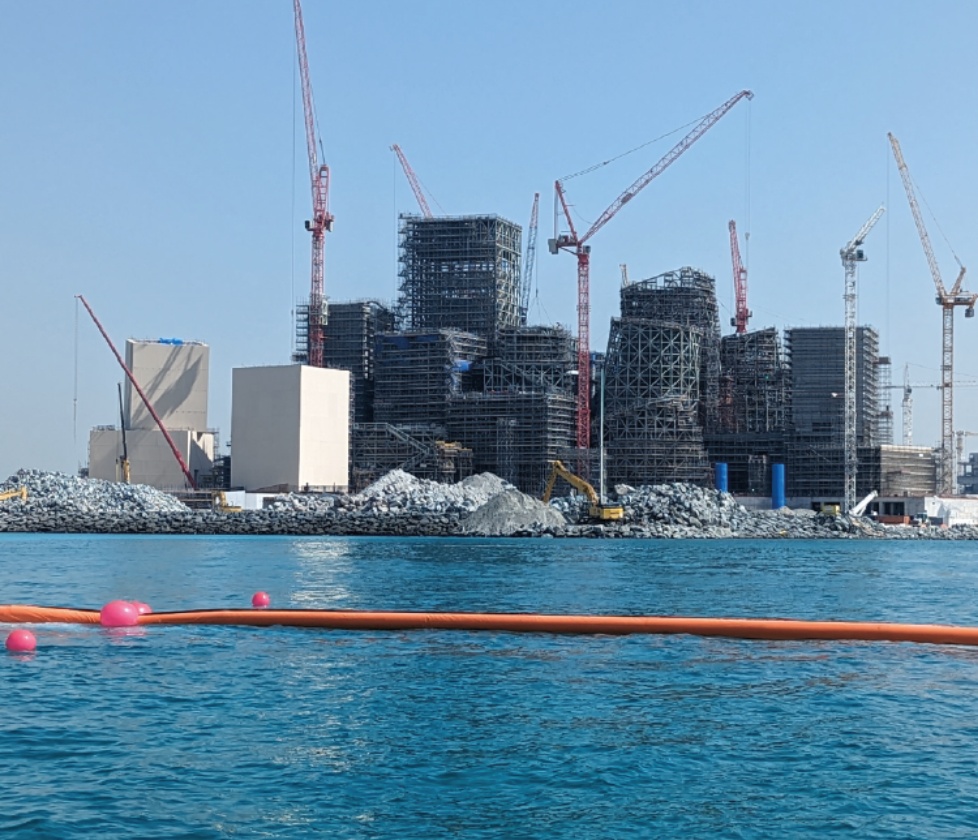
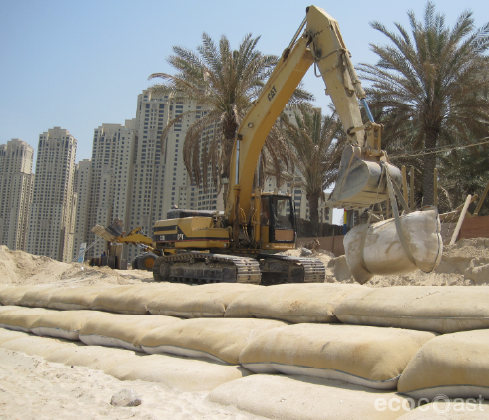
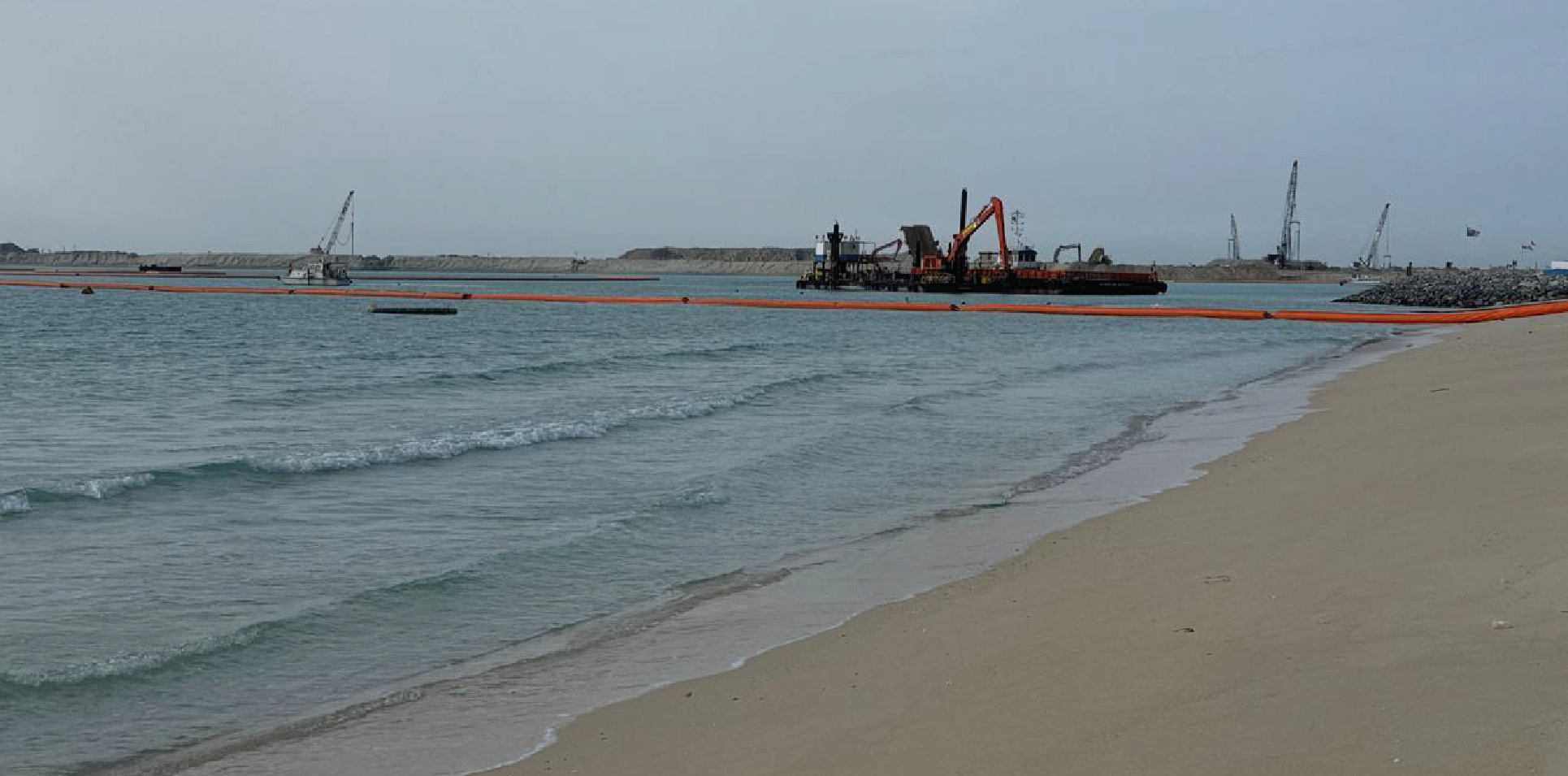
A dredging campaign under a turbidity condition usually involves two unrelated suppliers. One for the silt curtain, another one for the monitoring. When a reading breaches the limit, nobody can say whether the curtain failed, the plume travelled around it or the sensor drifted. The contractor is left arguing about the data instead of fixing the problem.
Deployed together, the monitoring becomes a performance check on the containment. Turbidity at the boundary tells you whether the curtain is holding, in real time, while there’s still a shift left to adjust. It also produces the compliance record the consent requires, from a system whose position and configuration we set ourselves.
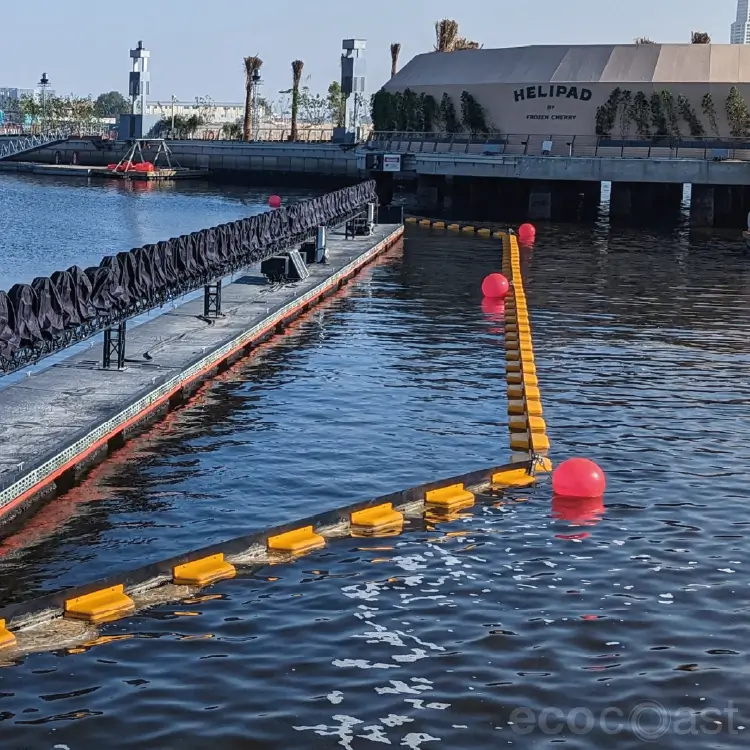
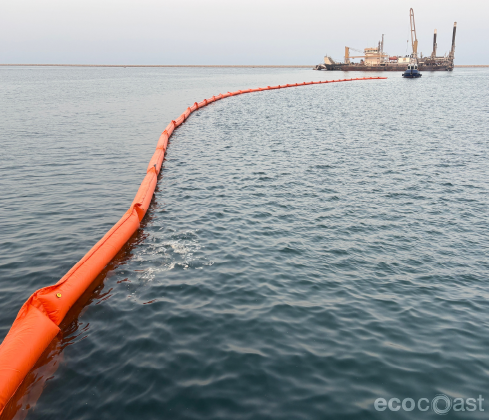
An oil boom is passive. Hydrocarbon sensing closes a gap. Detection triggers the response rather than a passing vessel reporting a sheen, and the same monitoring then confirms whether containment held. At a water intake, the difference between detection at the boundary and detection at the screen is the difference between a deployment and a shutdown.
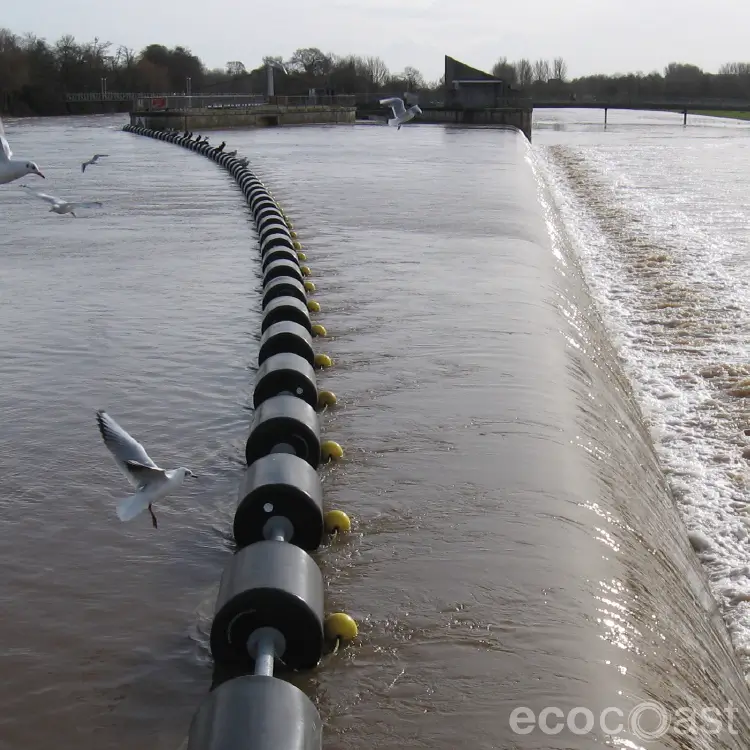
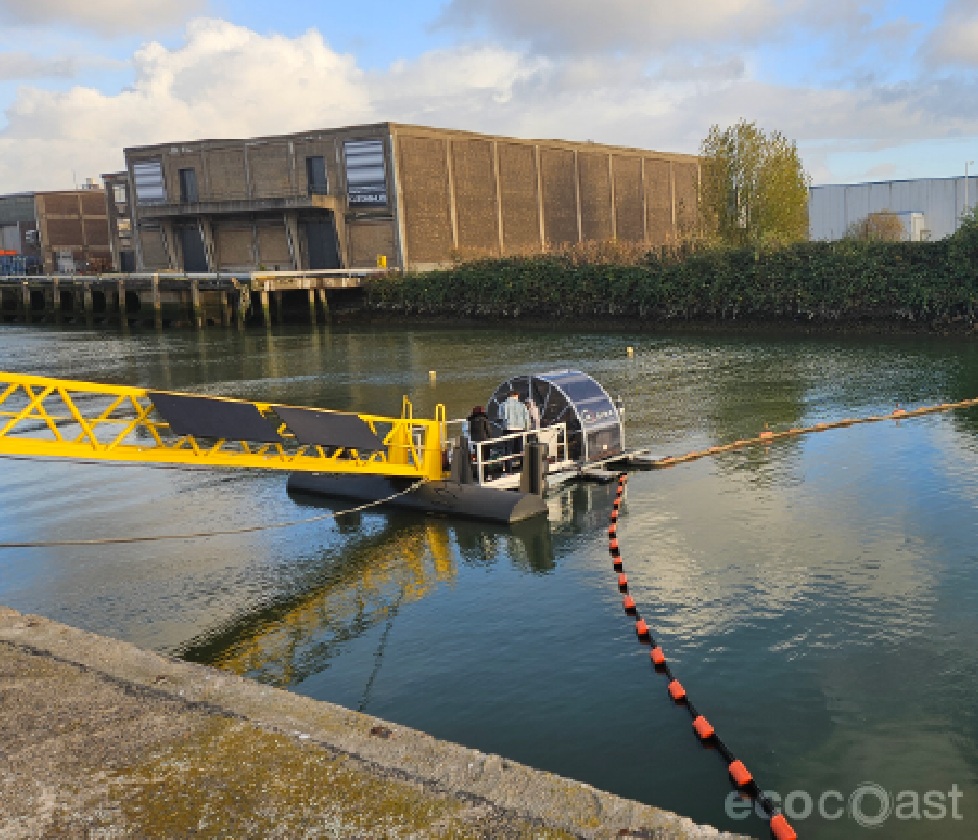
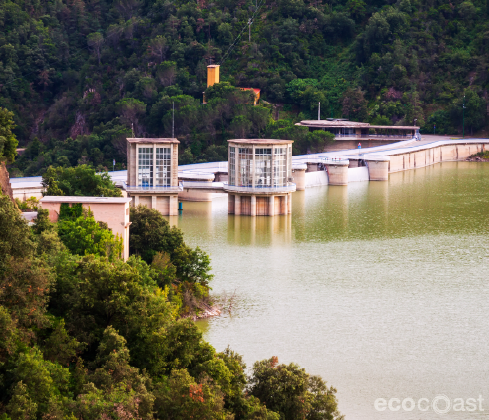
Debris booms protect intakes and trash racks from floating material. The same reservoirs carry the water quality risks that affect generation and environmental compliance – thermal stratification, oxygen depletion at depth and algal blooms that arrive with warm, still conditions. Both problems sit at the same structure and are best handled by the same team on the same visit.
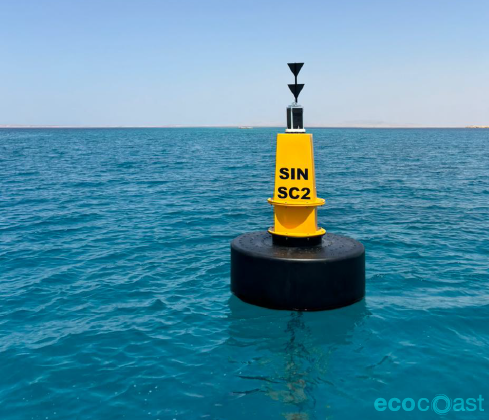
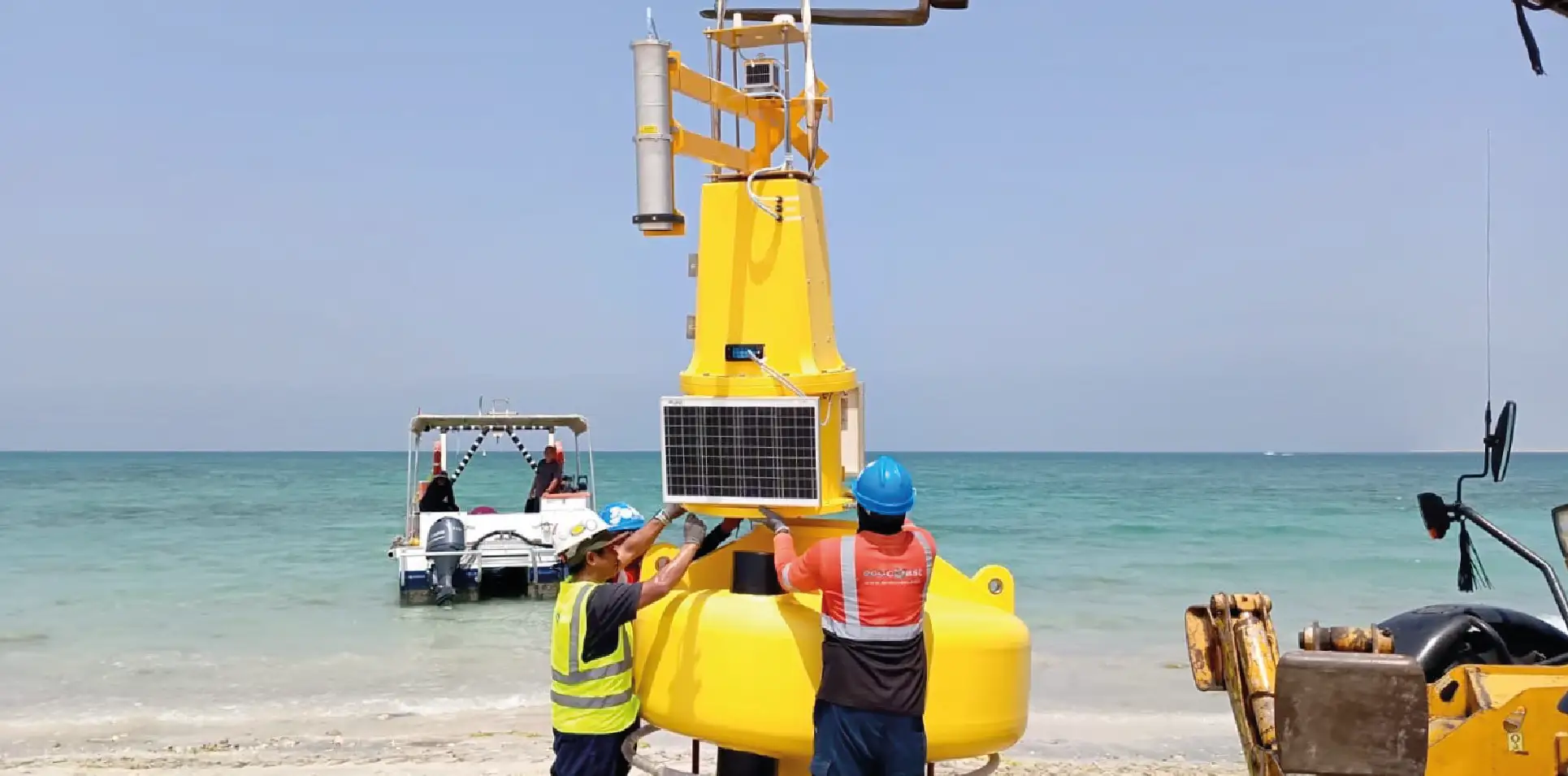
Installing a data buoy needs a boat, a crew and a mooring designed for the seabed it sits on. That’s marine work, not instrument work – and it’s what we do every day.
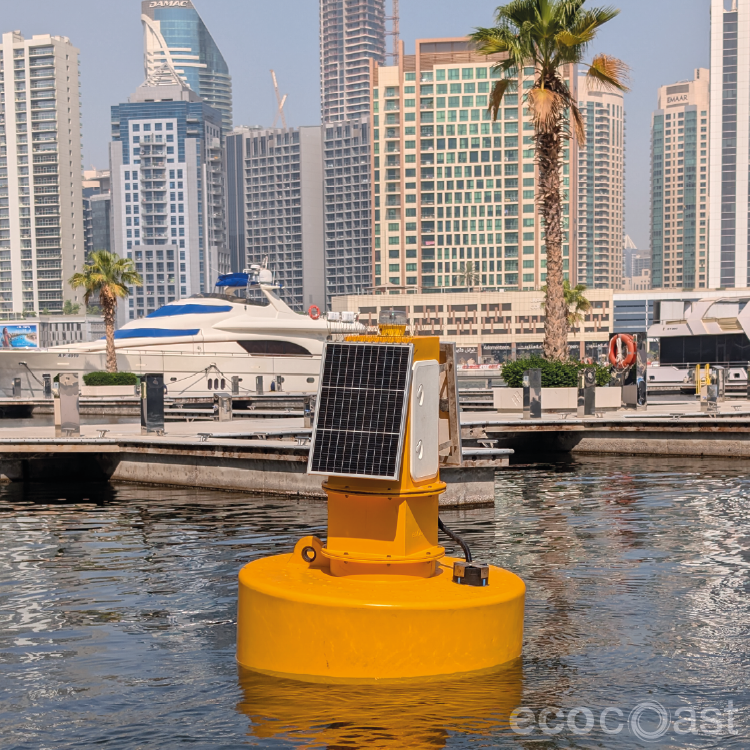
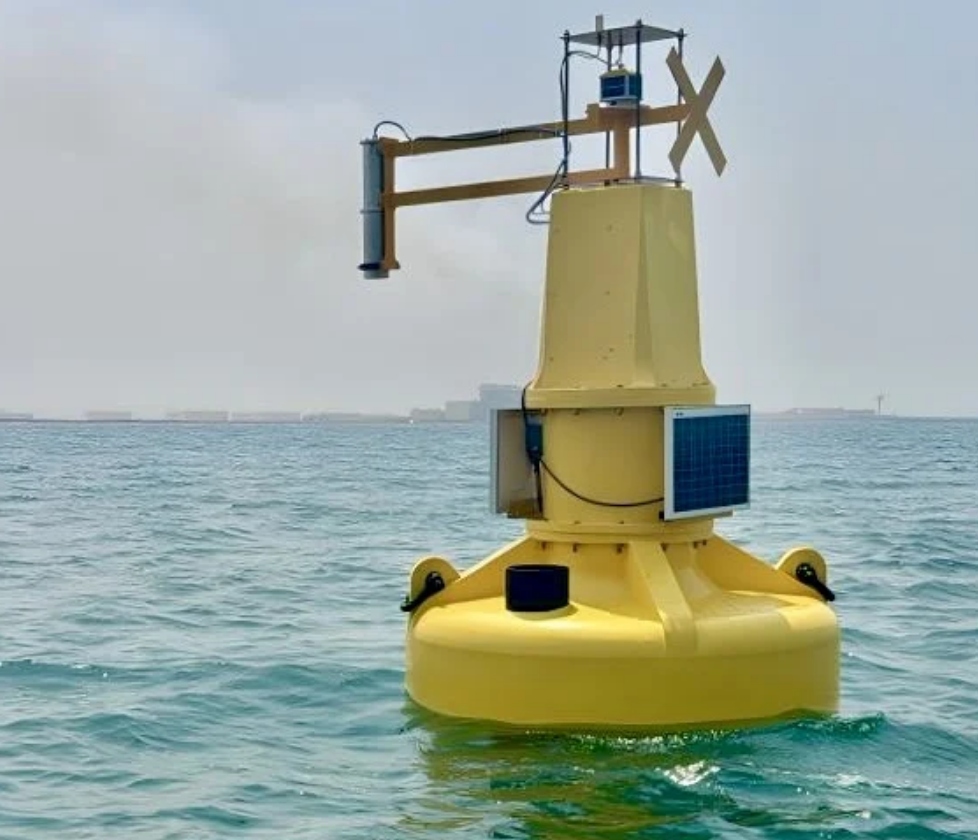
This is not a capability starting from zero. At a water and power plant on Saudi Arabia’s Red Sea coast, we assembled, configured, tested and commissioned a YSI DB1750 Multi Purpose Metocean Buoy, integrating an LDI ROW oil spill sensor and a Campbell Scientific logger with cellular telemetry. Live data streams to Xylem’s YSI HydroSphere platform.
In Dubai, a similar system was delivered for a major water utility using the same approach. At a private island development in Umluj, Saudi Arabia, we have carried out sensor repair and DB1750 reconfiguration, alongside sensor servicing and annual maintenance calibrations for clients across the UAE.
Different sites, different parameters, one thing in common: the work was done here.
Gulf waters are a demanding place to keep instruments running. Summer water temperatures sit close to regional guiding limits for months at a time. Warm water holds less oxygen, which compounds every other pressure on a site. Semi-enclosed marina basins and harbour developments flush slowly, so conditions concentrate near berths rather than dispersing. Biofouling rates are high.
Those conditions are exactly when monitoring matters most, and exactly when a system left unserviced will drift. A three-week wait on a replacement sensor in February is an inconvenience. The same wait in August is a gap in the record during the period the regulator is most likely to ask about.
For anyone specifying environmental monitoring in the GCC, the practical differences are straightforward. Shorter lead times on systems and spares. Calibration without an export shipment. Engineers who have worked in these conditions. A single accountable partner for the platform, the sensing, the deployment and the reporting – rather than a supply chain that hands off at each stage. And on projects where we’re already delivering silt curtains, oil booms or debris booms, the monitoring is not a separate contract with a separate mobilisation – it is part of the same scope, installed by the same team.
Read the full announcement, or see our environmental monitoring solutions and data buoy range. To discuss monitoring on a specific site, talk to our technical team.
Share:

An Authorised Systems and Service Partner is appointed by a manufacturer to integrate its technology into complete systems and to provide service and support for those systems in a defined territory. Ecocoast holds this appointment from Xylem for the GCC.
The appointment covers the Gulf Cooperation Council: the United Arab Emirates, the Kingdom of Saudi Arabia, Bahrain, Kuwait, Oman and Qatar.
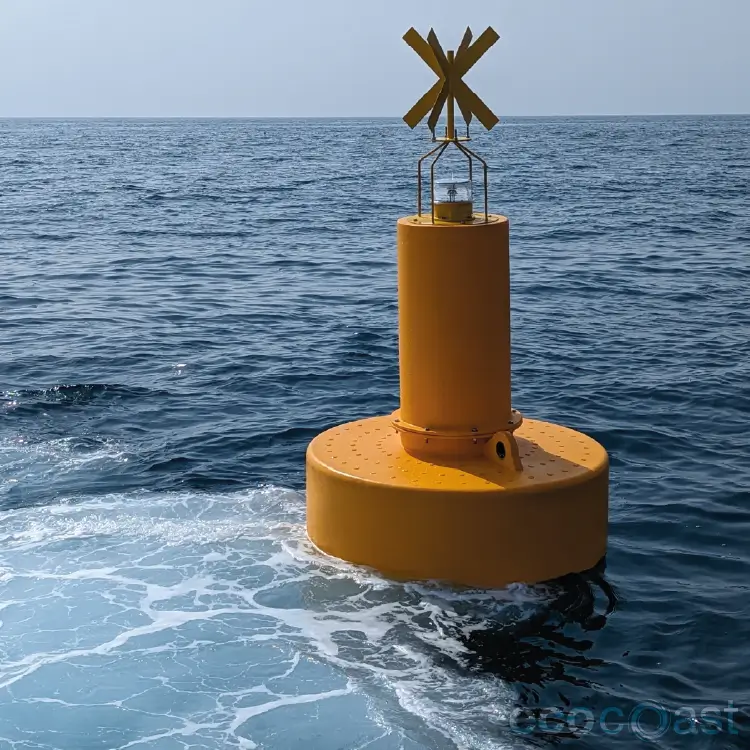
Xylem sensing technologies including YSI and Aanderaa instruments, integrated into configurable data buoy platforms for water quality, oceanographic and meteorological monitoring.
At Ecocoast facilities in Umm Al Quwain, the United Arab Emirates, and Yanbu, Saudi Arabia. Assembly, configuration, commissioning, calibration, repair and maintenance are all carried out in the region.
Ecocoast works with Xylem, not instead of Xylem. The appointment adds regional integration, deployment and service capability to Xylem's presence in the GCC, giving clients here a local route to the same technology, delivered as a complete system and supported throughout its life.
An Authorised Systems and Service Partner is appointed by a manufacturer to integrate its technology into complete systems and to provide service and support for those systems in a defined territory. Ecocoast holds this appointment from Xylem for the GCC.
The appointment covers the Gulf Cooperation Council: the United Arab Emirates, the Kingdom of Saudi Arabia, Bahrain, Kuwait, Oman and Qatar.
Xylem sensing technologies including YSI and Aanderaa instruments, integrated into configurable data buoy platforms for water quality, oceanographic and meteorological monitoring.
At Ecocoast facilities in Umm Al Quwain, the United Arab Emirates, and Yanbu, Saudi Arabia. Assembly, configuration, commissioning, calibration, repair and maintenance are all carried out in the region.
Ecocoast works with Xylem, not instead of Xylem. The appointment adds regional integration, deployment and service capability to Xylem's presence in the GCC, giving clients here a local route to the same technology, delivered as a complete system and supported throughout its life.