Ready to green your grey infrastructure? Discover Ecoreef →
1,333,018 Meters OF MARINE BARRIERS AND COUNTING  LIVE
LIVE
Solutions for marine pollution control, coastal and shoreline protection to effectively address environmental concerns.
View All Products
Solutions for the protection of critical infrastructure and other high-security areas.
View All Products
End-to-end solutions for environmental protection, safety and security applications that protect, monitor and regenerate marine environments.
View All Solutions
End-to-end marine and engineering services designed to ensure high-performing projects.
View All Services
Industry-focused expertise delivering proven solutions for coastlines and waterways, from initial concept to long-term operation and protection.
View All Industries

Solutions for marine pollution control, coastal and shoreline protection to effectively address environmental concerns.
View All Products
Solutions for the protection of critical infrastructure and other high-security areas.
View All Products
End-to-end solutions for environmental protection, safety and security applications that protect, monitor and regenerate marine environments.
View All Solutions
End-to-end marine and engineering services designed to ensure high-performing projects.
View All Services
Industry-focused expertise delivering proven solutions for coastlines and waterways, from initial concept to long-term operation and protection.
View All Industries

Share:


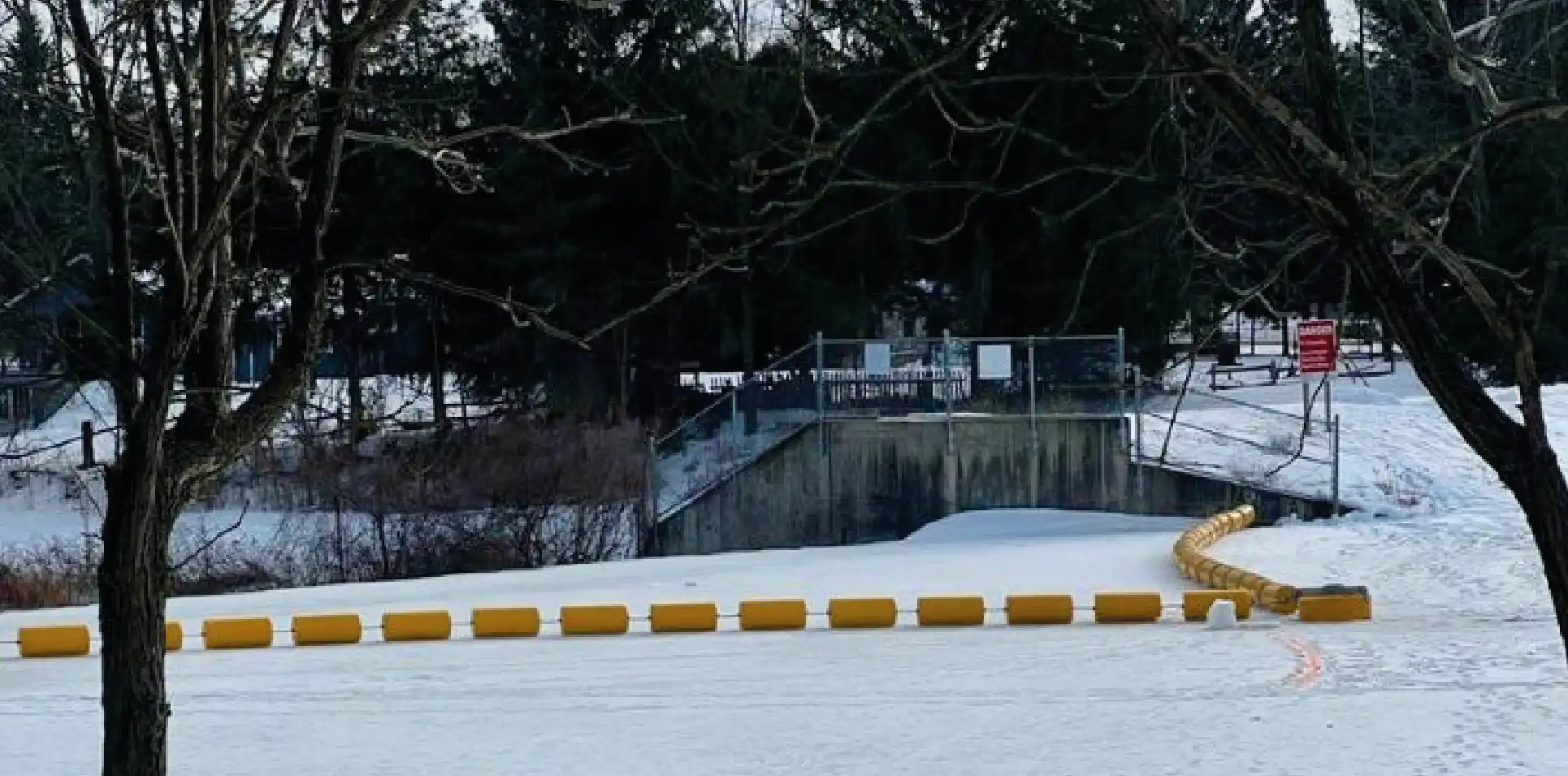
Extreme weather protection is no longer optional. Extreme weather events make up a small portion of global weather activity. However, they continue to be responsible for a dramatically higher share of deaths, infrastructure damage and economic loss.
While some events are so severe that no protective system can withstand them, these are the “extremes within the extremes”. Most of the destruction we see today, happens not because the event was impossible to manage. It happens because communities were unprepared or relied on equipment that wasn’t built for harsh conditions, including winter storms, freezing rivers and ice flows.
According to the World Meteorological Organization (WMO), weather-, climate- and water-related disasters surged nearly five-fold between 1970 and 2019.
The updated 2021 edition of the WMO “Atlas of Mortality and Economic Losses” shows that between 1970 and 2021, nearly 12,000 disasters were recorded. These resulted in roughly 2 million deaths and US$ 4.3 trillion in economic losses.
The first dedicated report on climate for the Arab region, confirmed that 2024 was the hottest on record. The region is warming at nearly twice the global average, with extreme heat, droughts, flash floods and destructive storms becoming more frequent. In that year alone, extreme events affected nearly 3.8 million people and caused over 300 reported deaths, primarily from heatwaves and floods.
The idea that extreme weather is “too rare” to justify investment no longer reflects reality. The climate is warming, storms are intensifying and rainfall patterns are changing, which makes these events more unpredictable.
A common misconception is that because extreme events don’t happen often, they don’t justify higher investment. But the damage they cause – when they do occur – is enormous. Many governments and agencies now treat these events as high-risk, low-frequency rather than low-risk, low-frequency.
This shift makes sense. If the cost of preparing is lower than the cost of rebuilding, recovery and disruption, then preparedness is the smarter choice. Climate change simply makes the equation even clearer.
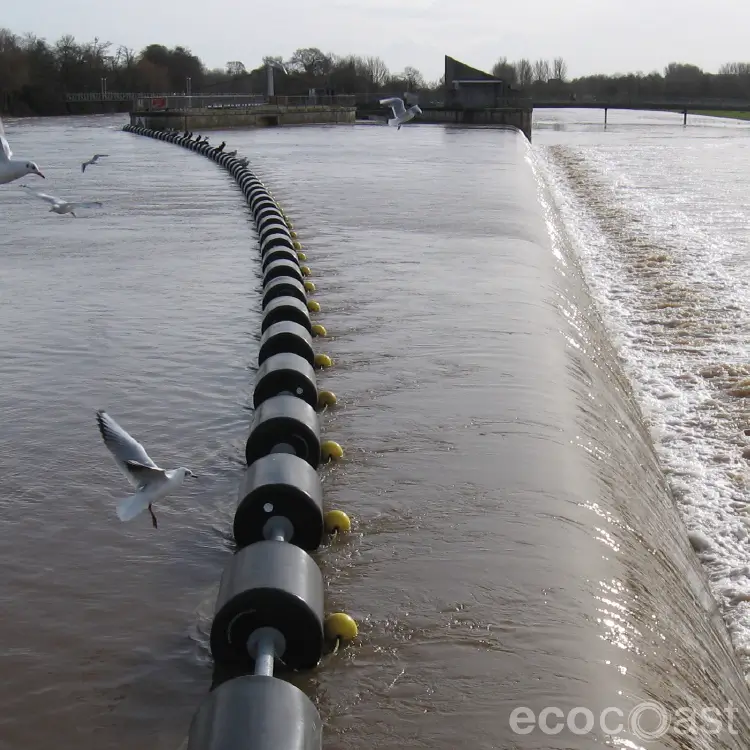
During the severe floods of 2013-2014 in the United Kingdom, we had already installed 300 Bolina Rope Safety Booms (RSB) along the River Thames. They played a crucial role during the crisis. A few key results from that event include:
💡 The booms diverted high-speed debris away from critical flood-control infrastructure.
💡 Their design allowed people in the water to climb onto the floats – up to two people per unit – without ladders, offering a life-saving function.
💡 None of the units required maintenance or replacement, even under near-record water levels and flow conditions.
This kind of performance is not limited to the UK. Our booms are also deployed across Europe and North America in environments where resilience is absolutely essential.
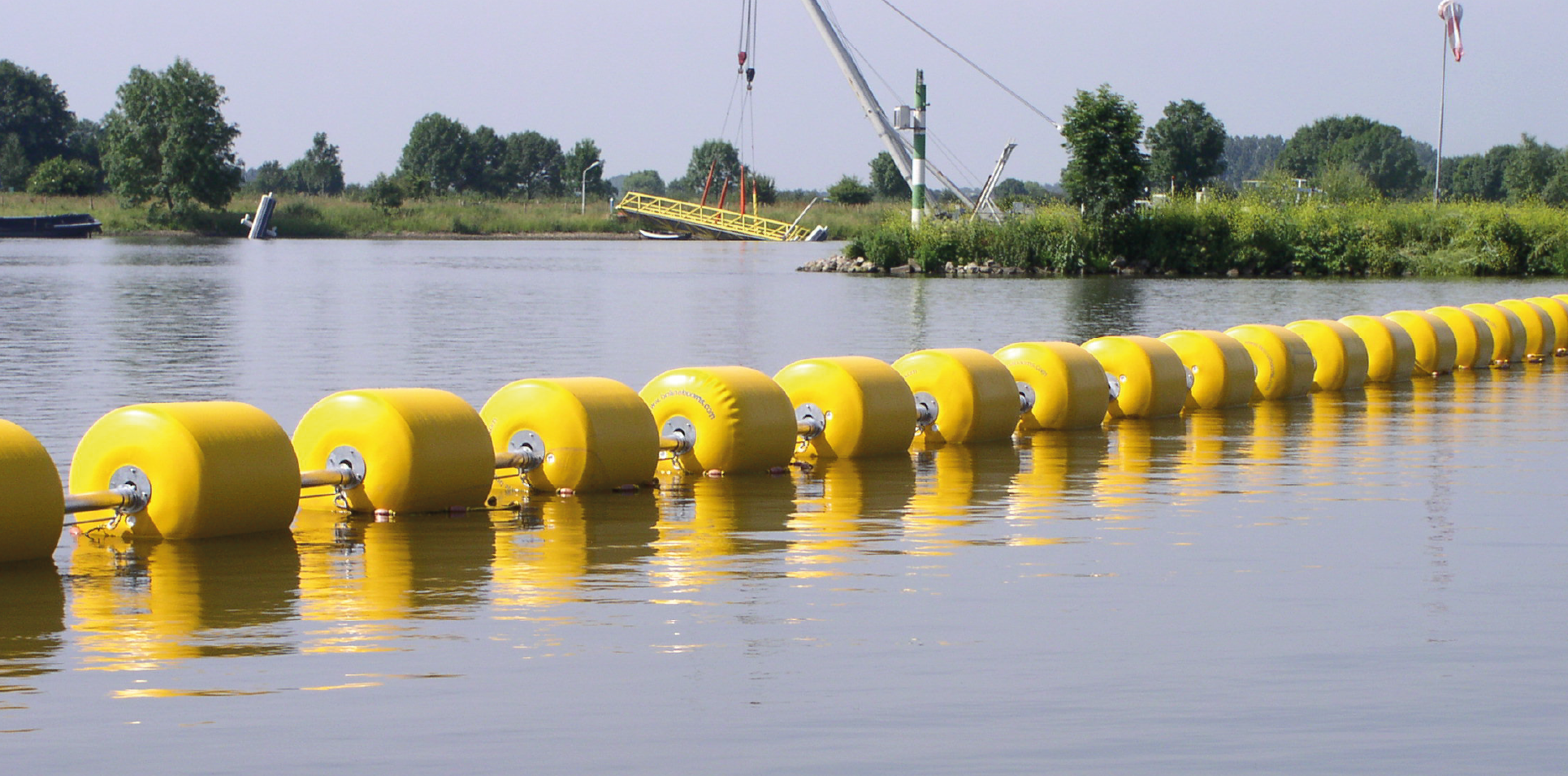
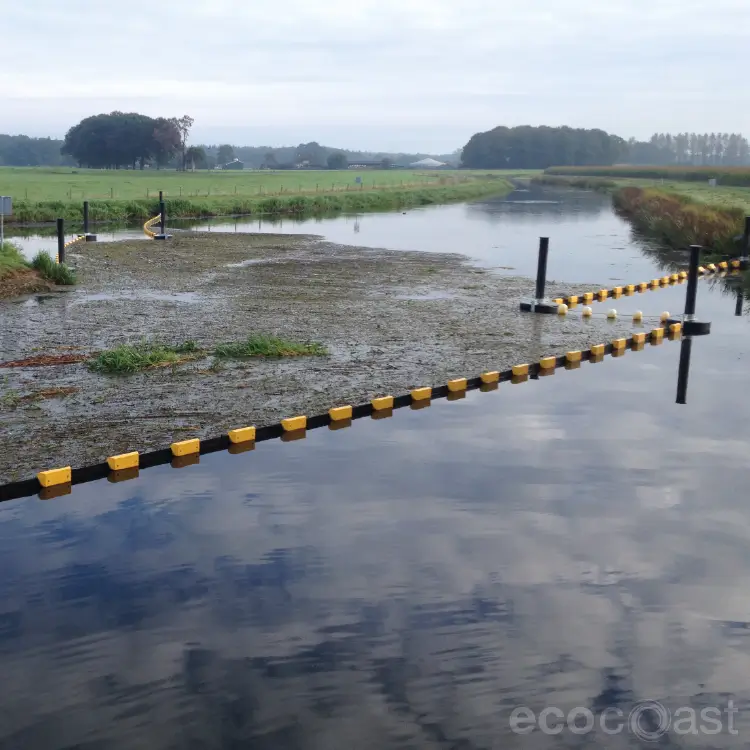
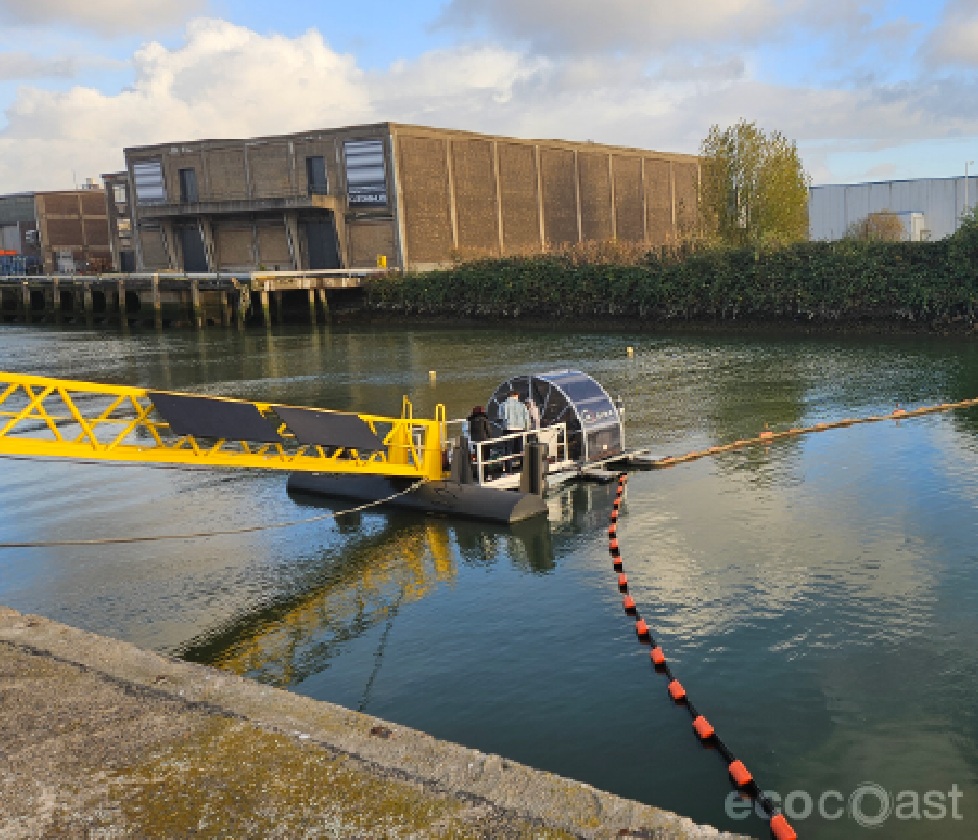
A strong example is at De Biesbosch National Park in the Netherlands, one of the country’s largest national parks and one of the last major freshwater tidal wetlands in Northwestern Europe. The site faces powerful winter storms, ice flows and shifting water levels, which made reliability a key requirement. Bolina Watercraft Safety Booms (TCB) were selected specifically because they could withstand harsh, freezing winters while protecting a highly sensitive ecological area.
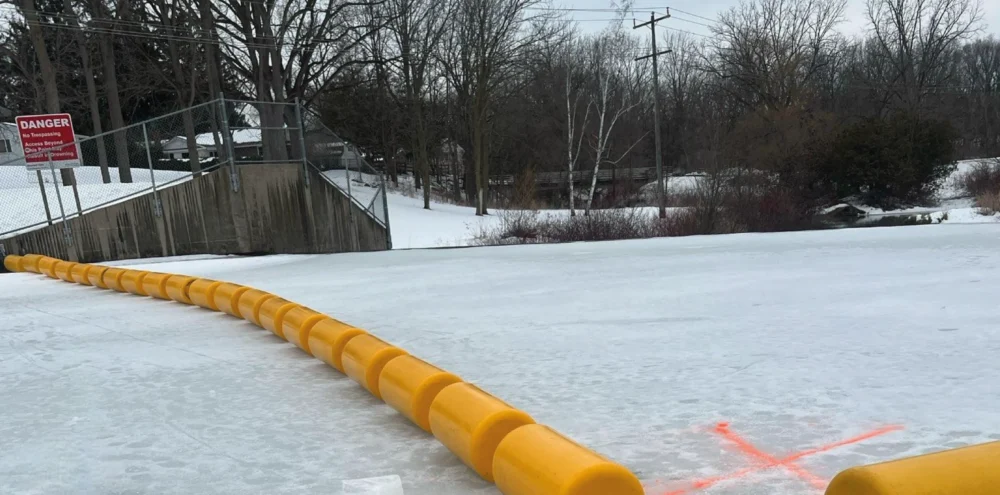
Another recent example comes from our strategic partner in Canada, ADOR Marine. In Norwich, Bolina Watercraft Safety Booms (CAB) were successfully delivered and installed as part of a public safety upgrade. The CAB400 series used at the site was modified for Canadian conditions. It is designed to handle ice, winter currents and freezing temperatures. The booms are installed permanently, especially in areas where preventing public access is essential. Before installation, boats were at high risk of being swept downstream by strong currents. The project was designed to bring the site into full compliance with Canadian hydraulic safety standards. Project photo at the top of this blogpost.
Across Europe and North America, these projects demonstrate the same lesson. When equipment is engineered for extreme conditions, it consistently protects people, infrastructure and the environment, without any issues.
Protecting people, assets and the environment requires long-term thinking. Weather patterns are shifting, river behavior is changing, and coastal areas face rising pressures. Reliable, high-performance solutions are no longer optional.
Early-warning systems play an important role, but they are only part of the solution. Physical protection – marine booms, debris deflection and containment systems – is essential for stopping the chain of damage before it starts.
Climate change is already altering how governments, developers, marine contractors and environmental agencies plan their infrastructure. Regions once considered low-risk are experiencing sudden flooding, intense storms and rapid temperature swings. Delayed action now leads to much higher long-term costs.
Working with partners whose solutions have been tested in real-world events – not just simulations – is one of the most effective ways to protect people and assets. When equipment is built to perform in extreme conditions, it provides peace of mind in moments when every second counts.
–
At Ecocoast, we build safer, cleaner and more sustainable coastlines and waterways. Discover how our solutions can protect your assets and communities from extreme weather. Contact us today!
Share:




 Prev Blog

 Related Blog Posts