Ready to green your grey infrastructure? Discover Ecoreef →
1,333,018 Meters OF MARINE BARRIERS AND COUNTING  LIVE
LIVE
Solutions for marine pollution control, coastal and shoreline protection to effectively address environmental concerns.
View All Products
Solutions for the protection of critical infrastructure and other high-security areas.
View All Products
End-to-end solutions for environmental protection, safety and security applications that protect, monitor and regenerate marine environments.
View All Solutions
End-to-end marine and engineering services designed to ensure high-performing projects.
View All Services
Industry-focused expertise delivering proven solutions for coastlines and waterways, from initial concept to long-term operation and protection.
View All Industries

Solutions for marine pollution control, coastal and shoreline protection to effectively address environmental concerns.
View All Products
Solutions for the protection of critical infrastructure and other high-security areas.
View All Products
End-to-end solutions for environmental protection, safety and security applications that protect, monitor and regenerate marine environments.
View All Solutions
End-to-end marine and engineering services designed to ensure high-performing projects.
View All Services
Industry-focused expertise delivering proven solutions for coastlines and waterways, from initial concept to long-term operation and protection.
View All Industries

Share:


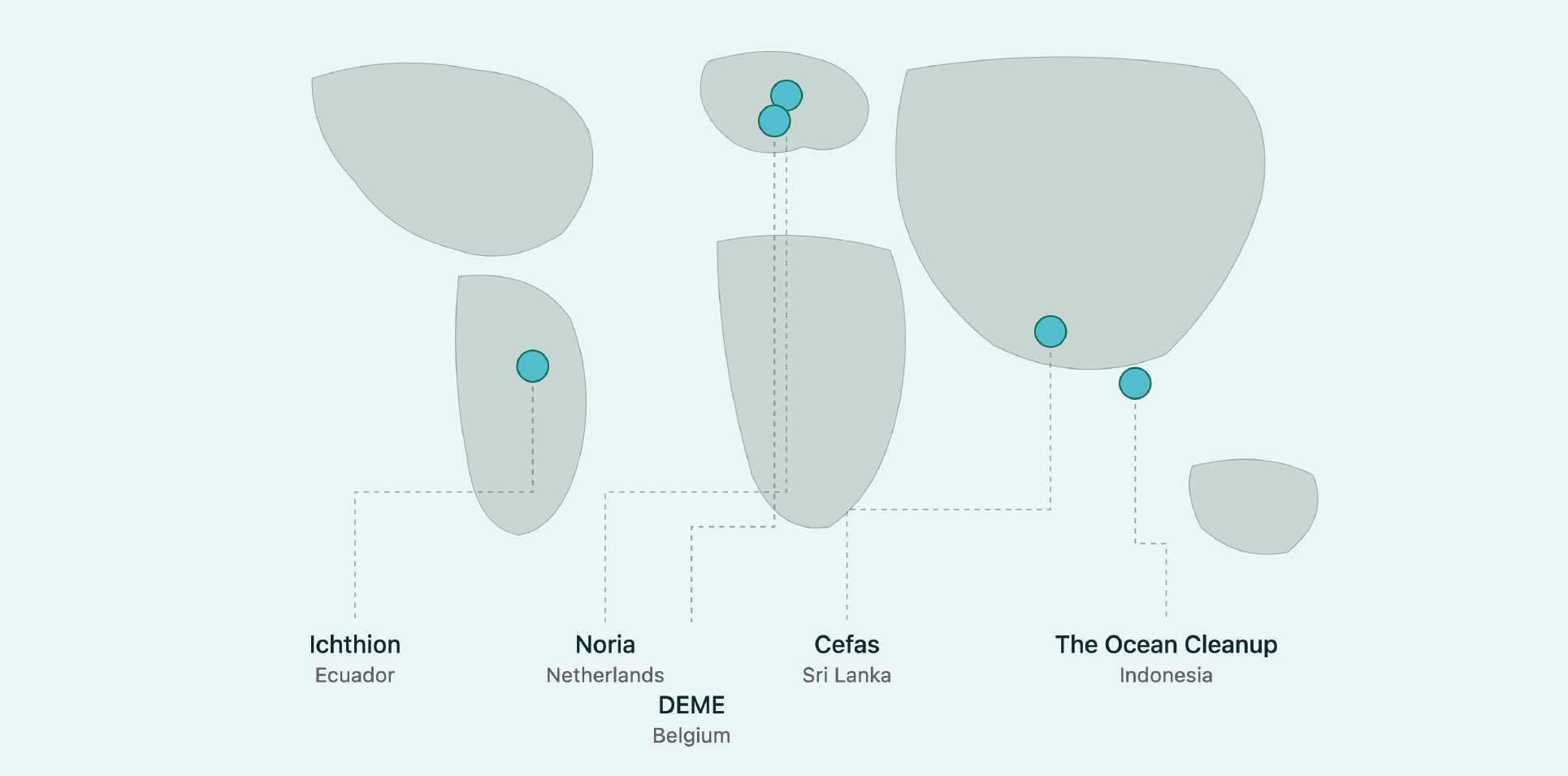
Plastic pollution doesn’t respect borders. Neither does the work to stop it. Over the past several years, Ecocoast has partnered with organizations across five countries to intercept debris before it reaches the ocean. Each project shaped by a different river, a different challenge, and a different partner.
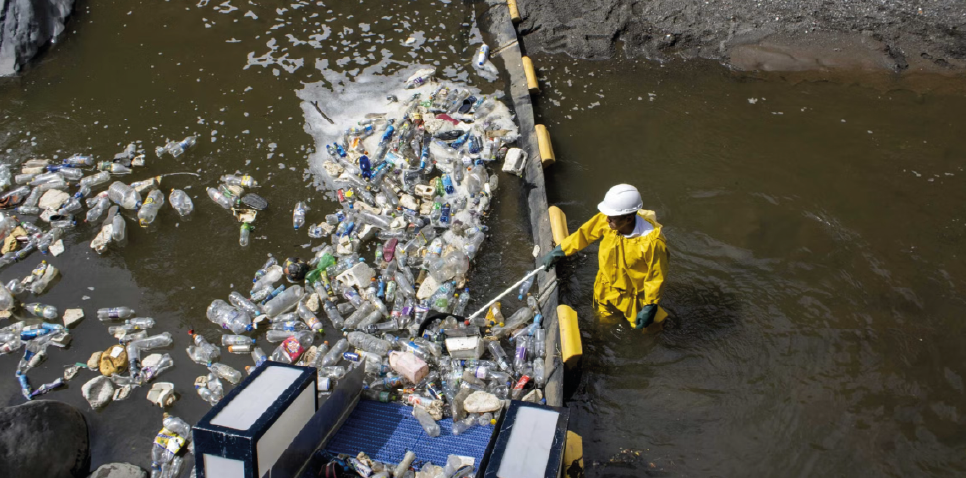
In Ecuador, Ichthion deployed its Azure system, a mobile conveyor belt built to remove plastic debris from the Portoviejo River. It is one of only eight projects worldwide selected for the Clean Currents Coalition. CCC is a global network formed by the Benioff Ocean Science Laboratory at UC Santa Barbara. Ecocoast supplied the debris boom supporting the system. The boom’s porous design prevents pressure imbalance between upstream and downstream flow. Its target depth also lets fluvial fauna pass underneath, protecting the river’s wildlife while still trapping waste.
The system faced real environmental challenges: extreme weather events, large organic debris flows, and limited site accessibility. It is documented in the Benioff Ocean Science Laboratory’s Field Guide for Cleaner Currents, an open-access resource on river plastic capture projects worldwide.
Every Ecocoast boom is custom-engineered for the specific site and environmental conditions it will face. There’s no off-the-shelf product. That approach is exactly what allowed the boom supporting the Azure system to perform under Ecuador’s variable, high-debris conditions.
The Portoviejo River empties into the Pacific Ocean and carries over half the waste generated across Ecuador’s Manabí province. Intercepting debris here directly reduces the volume reaching the coast.
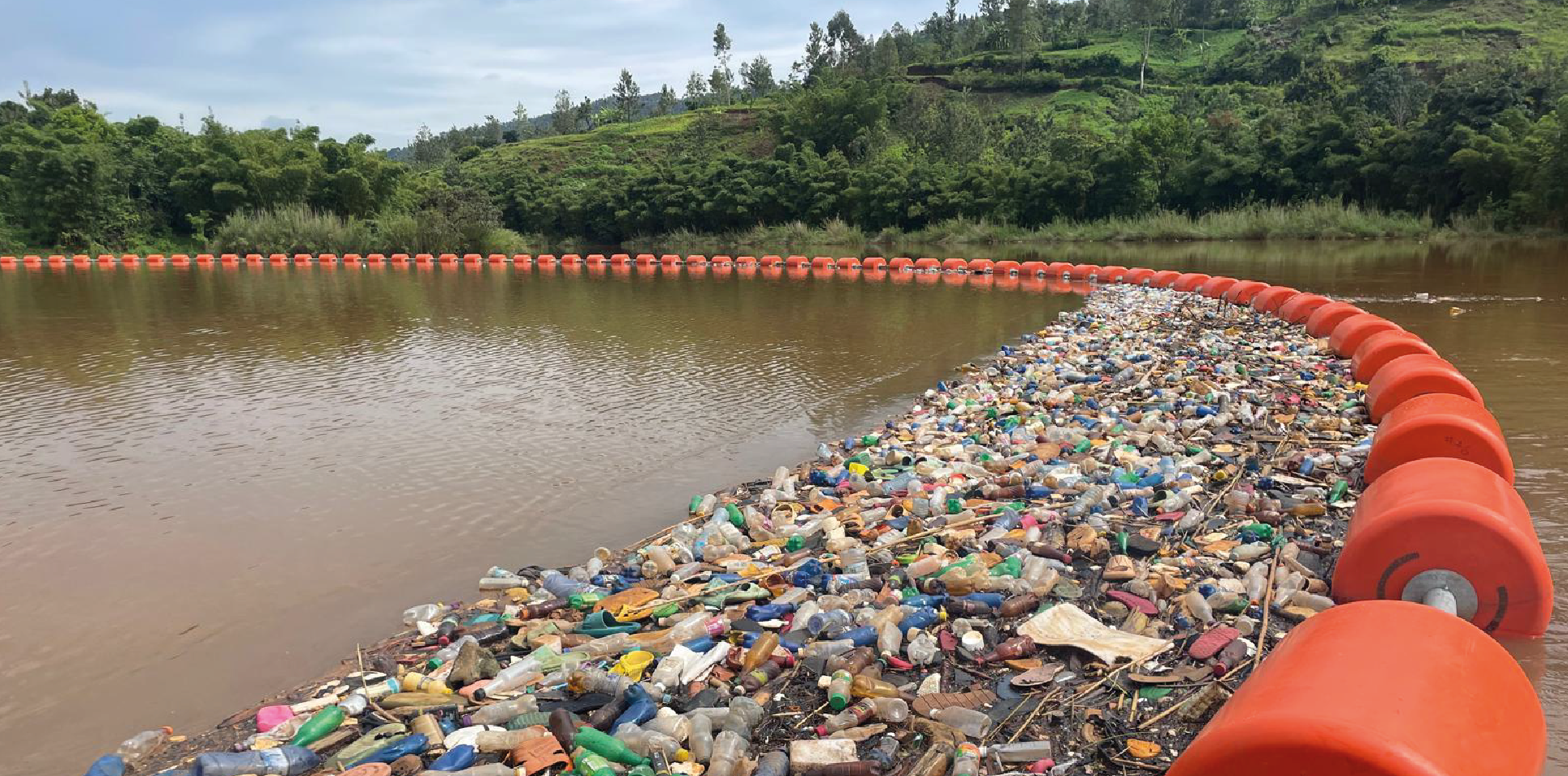
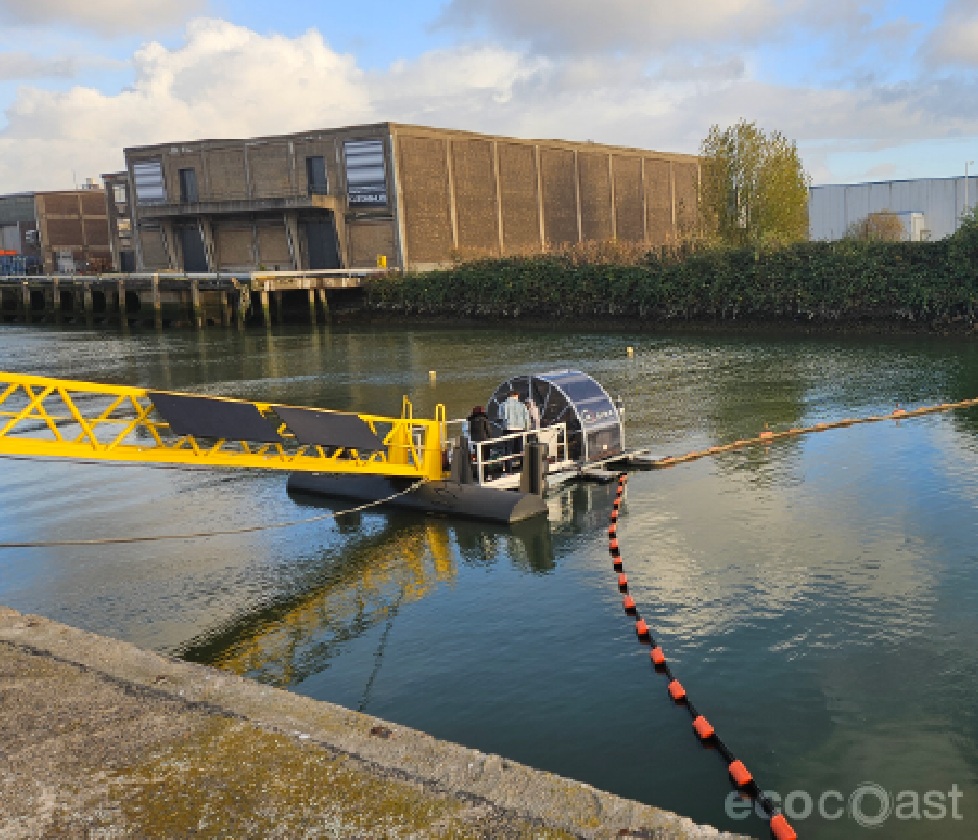
At Rotterdam’s Keilehaven, Dutch tech scale-up Noria operates the CirCleaner. It is the first waste collection system purchased by the Municipality of Rotterdam as part of the city’s broader effort to reduce waste reaching the sea. Ecocoast supplied Bolina Permanent Debris Booms, custom-built in Noria’s signature orange, to guide debris directly into the system.
The boom arms span 48 metres on one side and 34 on the other. Together, they funnel an estimated 3 cubic metres of waste into the CirCleaner every week. The booms also had to withstand a demanding environment: waves, wind and winter ice, all of which had damaged earlier PVC oil barriers Noria tested before switching to a permanent design. Read more on this partnership via DredgeWire.
In Sri Lanka, Ecocoast partnered with Cefas‘ Ocean Country Partnership Programme and NARA, the country’s National Aquatic Resources Research and Development Agency. The project deployed two debris booms: a shorter boom on the Kelani River, the originally planned site, and a longer boom on the Ja-Ela River, added after unseasonal rainfall affected conditions.
Beyond containment, both booms double as monitoring tools. They capture data on the composition and volume of litter travelling downriver, helping researchers understand the sources and trends behind Sri Lanka’s plastic pollution.
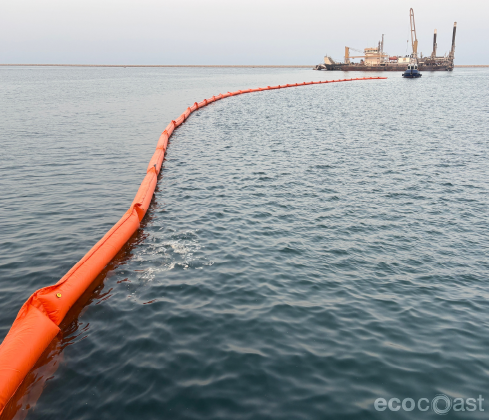
On Belgium’s Scheldt River, Ecocoast worked with DEME to engineer Europe’s longest floating debris barrier. The barrier captures 218 kilograms of plastic and debris daily, removing roughly 7 tonnes of waste and pollutants from the river every month.
The Scheldt flows through some of Belgium’s most industrialized waterways before reaching the North Sea. A barrier of this scale plays a meaningful role in reducing the volume of debris that would otherwise travel downstream.
The Ocean Cleanup used Bolina Permanent Debris Booms in some of its first Interceptor deployments, its river-based debris capture system, including early sites in Indonesia. Ecocoast also manufactured the screen for The Ocean Cleanup’s original System 001, part of the world’s largest ocean cleanup initiative.
These two contributions sit at different ends of the same mission. One intercepting debris in rivers before it disperses, the other addressing plastic already adrift in the open ocean.
Each of these projects faced a different environment: a fauna-sensitive river in Ecuador, a tidal harbor in the Netherlands, two rivers with shifting conditions in Sri Lanka, an industrial waterway in Belgium, and both rivers and open ocean through The Ocean Cleanup. But the underlying engineering principle stays consistent.
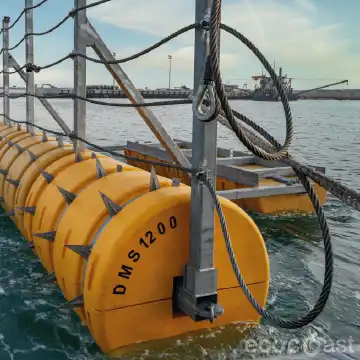
A well-designed debris boom needs to do more than simply float on the water. It should provide full-width and variable-depth containment, automatically adjust to changing water levels and withstand real environmental conditions. Most importantly, it should reduce long-term maintenance, not create more of it.
That consistency is what lets a single engineering approach adapt to five very different rivers, coastlines and partners – and it’s why these partnerships continue to expand into new regions each year.
Share:

Ecocoast has partnered with Ichthion in Ecuador, Noria in the Netherlands, Cefas and NARA in Sri Lanka, DEME in Belgium, and The Ocean Cleanup across river and ocean deployments including Indonesia.
Ecocoast engineered Europe's longest floating debris barrier on the Scheldt River in Belgium, in partnership with DEME. It captures 218 kilograms of plastic and debris daily.
Yes. Ecocoast manufactured the screen for The Ocean Cleanup's original System 001, and Bolina Permanent Debris Booms were used in some of its first Interceptor deployments, including early sites in Indonesia.
Some designs, like the boom supporting Ichthion's Azure system in Ecuador, use a porous structure and set target depth that allows fluvial fauna to pass underneath, while still trapping floating waste, including small items like cigarette filters and bottle tops.
Each river or waterway presents different conditions: tidal range, current speed, debris volume, wildlife sensitivity and boat traffic. Effective debris control adapts the same core engineering principles, full containment and durability, to the specific demands of each site.
Ecocoast has partnered with Ichthion in Ecuador, Noria in the Netherlands, Cefas and NARA in Sri Lanka, DEME in Belgium, and The Ocean Cleanup across river and ocean deployments including Indonesia.
Ecocoast engineered Europe's longest floating debris barrier on the Scheldt River in Belgium, in partnership with DEME. It captures 218 kilograms of plastic and debris daily.
Yes. Ecocoast manufactured the screen for The Ocean Cleanup's original System 001, and Bolina Permanent Debris Booms were used in some of its first Interceptor deployments, including early sites in Indonesia.
Some designs, like the boom supporting Ichthion's Azure system in Ecuador, use a porous structure and set target depth that allows fluvial fauna to pass underneath, while still trapping floating waste, including small items like cigarette filters and bottle tops.
Each river or waterway presents different conditions: tidal range, current speed, debris volume, wildlife sensitivity and boat traffic. Effective debris control adapts the same core engineering principles, full containment and durability, to the specific demands of each site.






 Prev Blog