Ready to green your grey infrastructure? Discover Ecoreef →
1,333,018 Meters OF MARINE BARRIERS AND COUNTING  LIVE
LIVE
Solutions for marine pollution control, coastal and shoreline protection to effectively address environmental concerns.
View All Products
Solutions for the protection of critical infrastructure and other high-security areas.
View All Products
End-to-end solutions for environmental protection, safety and security applications that protect, monitor and regenerate marine environments.
View All Solutions
End-to-end marine and engineering services designed to ensure high-performing projects.
View All Services
Industry-focused expertise delivering proven solutions for coastlines and waterways, from initial concept to long-term operation and protection.
View All Industries

Solutions for marine pollution control, coastal and shoreline protection to effectively address environmental concerns.
View All Products
Solutions for the protection of critical infrastructure and other high-security areas.
View All Products
End-to-end solutions for environmental protection, safety and security applications that protect, monitor and regenerate marine environments.
View All Solutions
End-to-end marine and engineering services designed to ensure high-performing projects.
View All Services
Industry-focused expertise delivering proven solutions for coastlines and waterways, from initial concept to long-term operation and protection.
View All Industries

Share:


People often picture marine plastic pollution as an open-ocean problem – a swirling patch of debris far offshore. But, the highest impact intervention point sits much closer to land, and much earlier in the journey.
Not in the open ocean. Once plastic reaches open water, it disperses and degrades. Cleanup becomes significantly harder and much more expensive. The highest-impact intervention point is upstream: river mouths, marina entrances and stormwater outfalls. That’s where debris concentrates, before it has a chance to spread.
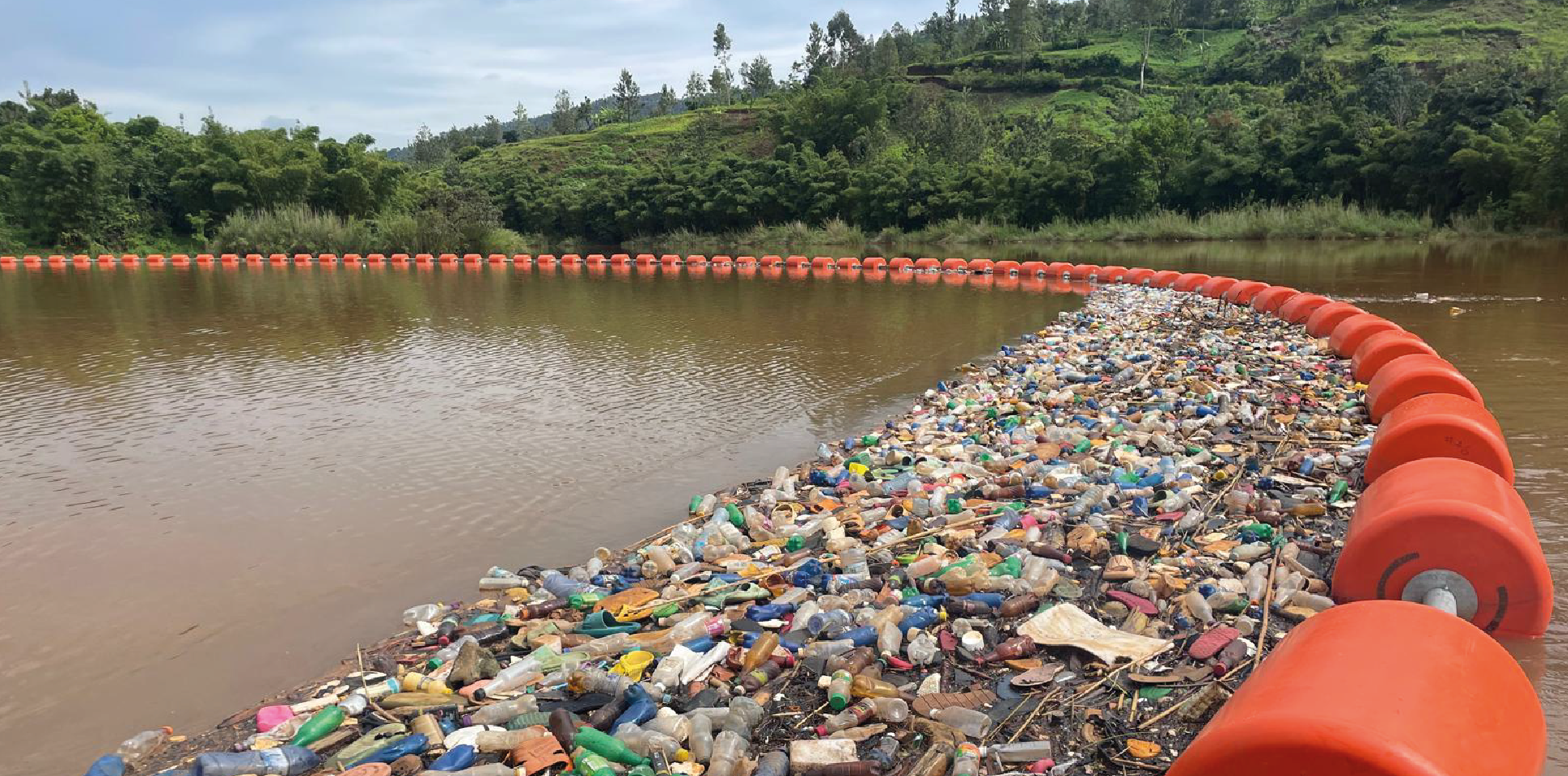
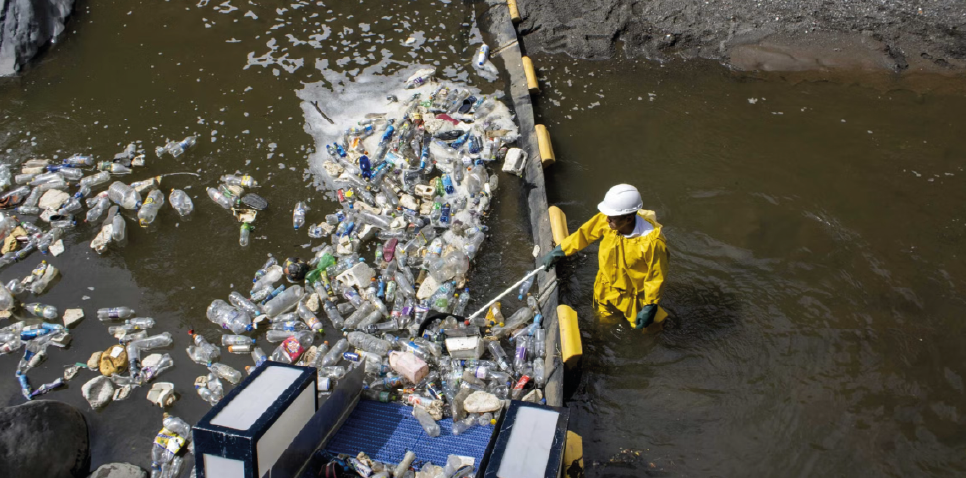
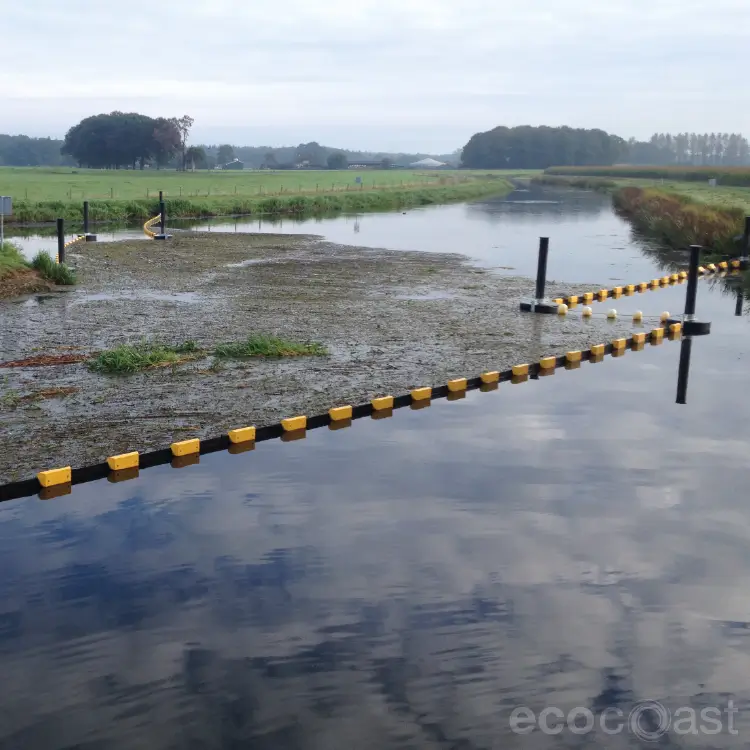
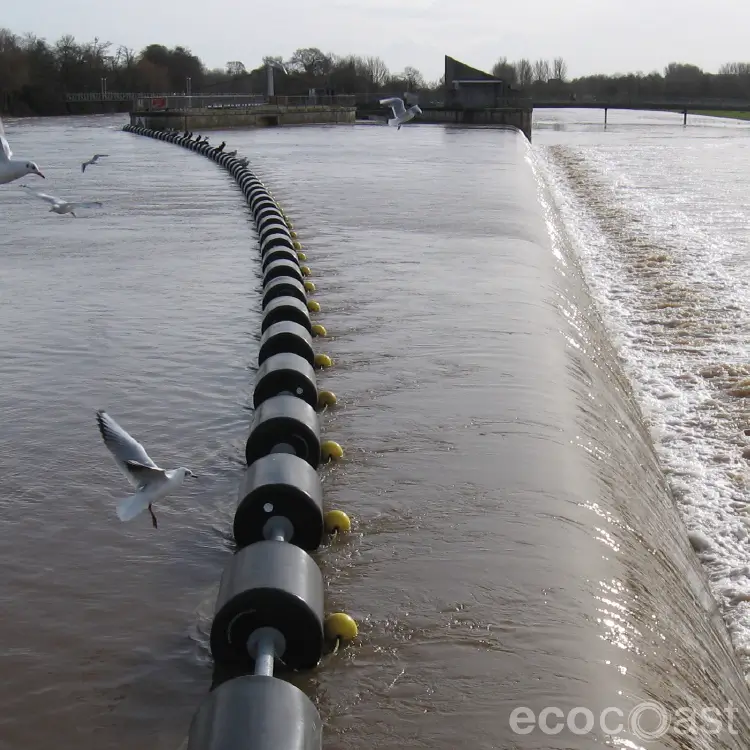
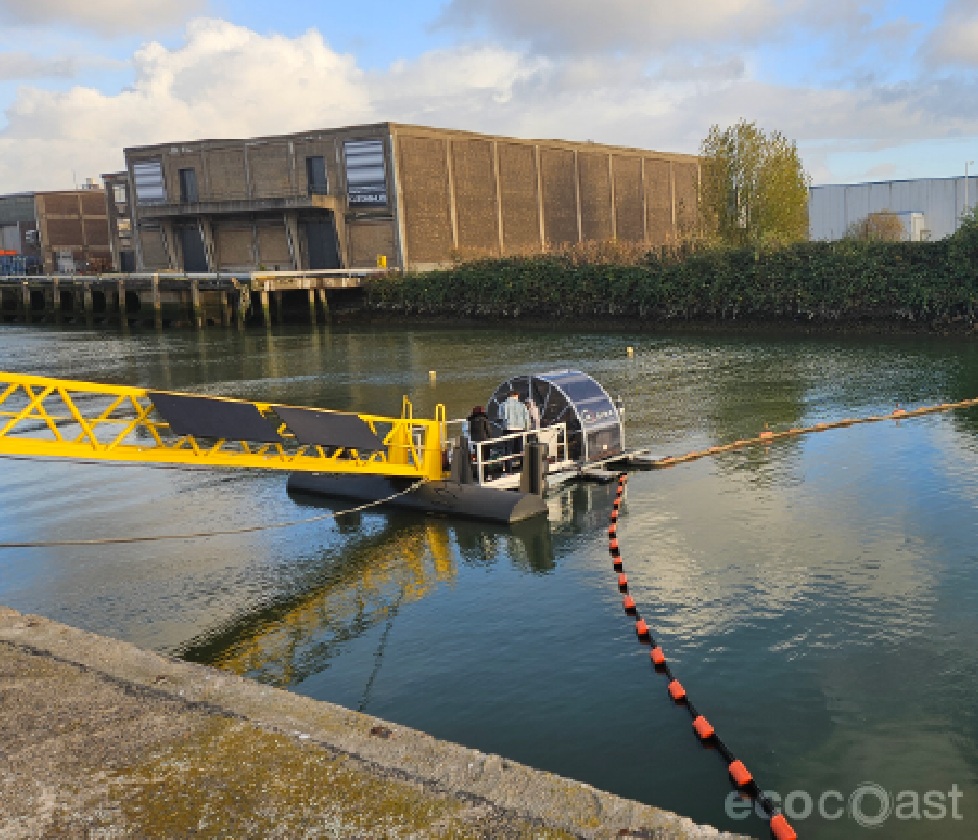
Debris booms hold a barrier across these choke points. Water flows through. Floating waste gets trapped for collection. It’s a simple concept for a high-volume problem. However, it only works if teams engineer and position the barrier correctly for local current, tide and debris load.
Barrier design varies significantly across the industry. And weaker designs tend to fail exactly where containment matters most:
In rivers and other high-flow environments, these two gaps – width, height and depth – cause most containment failures.
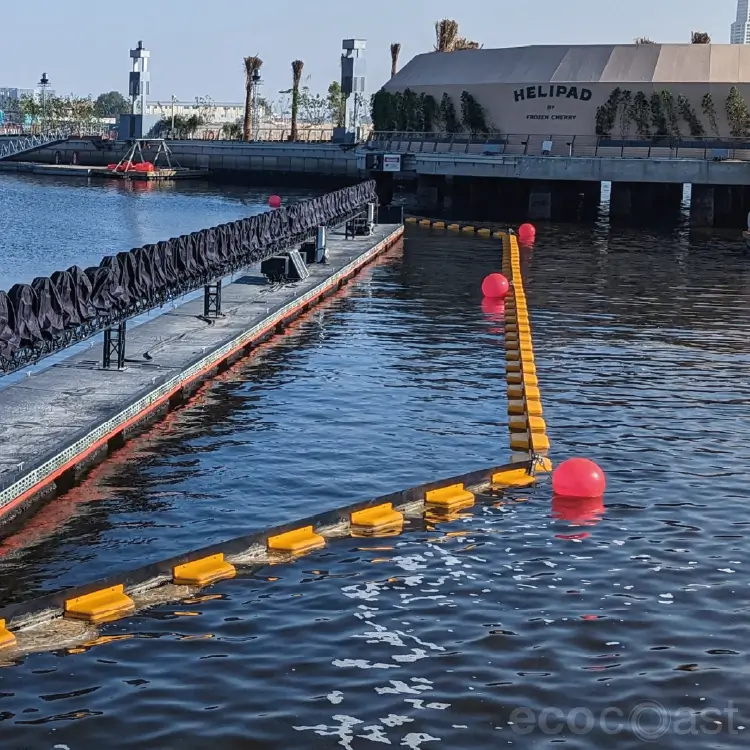
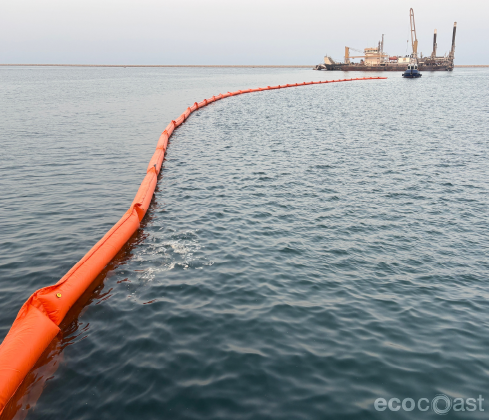
Ecocoast pioneered the modern floating debris barrier through Bolina, which it acquired in 2020. The design uses a fully flush-faced curtain: no gap at the surface, no gap below it. The barrier intercepts debris both above and below the waterline, then self-clears to a collection point or spillway. No slow manual removal required.
Where boats need to pass, built-in openings can let watercraft through freely. The barrier keeps its containment function intact. It solves the width problem without reopening the gap the design closes.
This flush-faced, full-depth design is now the solution the industry benchmarks against.
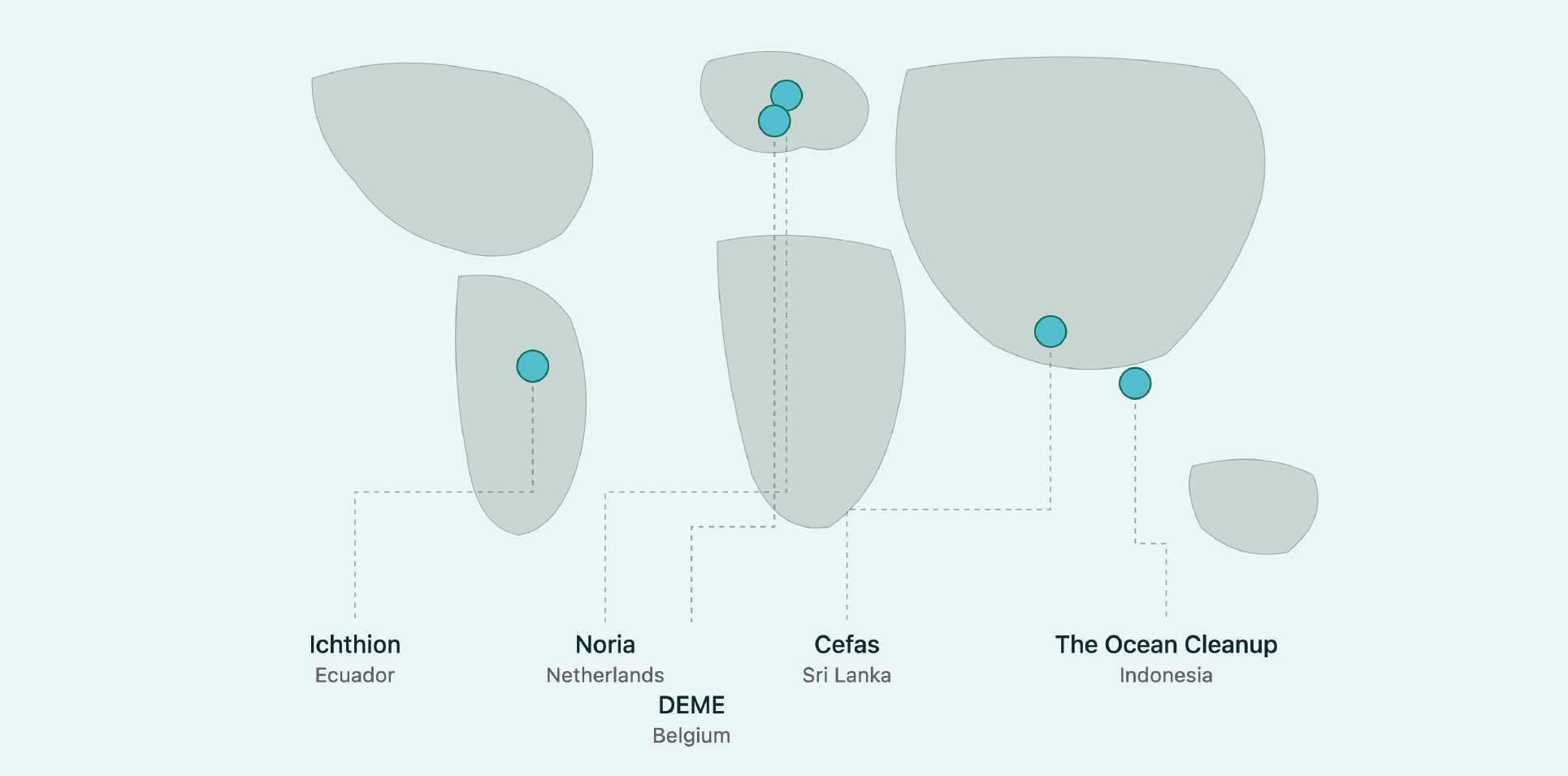
Organizations working on debris interception at scale have tested and proven this engineering approach:
Across each of these partnerships, the same thread runs through: effective debris control isn’t about installing any old floating barrier. Hydrodynamics matter. Flush-faced containment matters. Subsurface capture matters. Intelligent design that reduces maintenance matters.
This Plastic Free July, remember that individual behavior change and infrastructure work hand in hand. Yes, prevention infrastructure isn’t glamorous. But, it’s where the real reduction happens – and how it’s engineered makes all the difference.
Share:

The most effective interception points sit upstream – river mouths, marina entrances and stormwater outfalls – where debris is still concentrated and hasn't yet spread into open water. Once plastic reaches the open ocean, recovery becomes far more difficult and expensive.
Debris booms hold a floating barrier across a waterway choke point. Water passes through while the barrier traps floating waste for collection. Effective designs combine surface containment with subsurface capture, so debris cannot slip underneath.
A flush-faced debris boom uses a continuous curtain with no gap at the surface or below the waterline, unlike conventional float-and-skirt designs. It intercepts debris both above and below the water's surface, then self-clears to a collection point or spillway. The design was first introduced by Bolina, a company acquired by Ecocoast in 2020. It has since then been the benchmark in the industry.
Yes. Some debris boom designs, including Bolina Debris Booms, include built-in openings that let watercraft pass through without compromising the barrier's containment function.
Yes. Ecocoast manufactured the screen for The Ocean Cleanup's original System 001. The Ocean Cleanup also used Bolina Permanent Debris Booms in some of its first Interceptor deployments.
Bolina Permanent Debris Booms, part of the Ecocoast range, were used in some of The Ocean Cleanup's first Interceptor deployments in rivers.
Large-scale river interceptor projects typically rely on floating barriers that combine surface flotation with a subsurface screen or skirt. The most effective designs use full-width, flush-faced containment to prevent debris from slipping around or underneath the barrier – the same principle behind Bolina Permanent Debris Booms.
The most effective interception points sit upstream – river mouths, marina entrances and stormwater outfalls – where debris is still concentrated and hasn't yet spread into open water. Once plastic reaches the open ocean, recovery becomes far more difficult and expensive.
Debris booms hold a floating barrier across a waterway choke point. Water passes through while the barrier traps floating waste for collection. Effective designs combine surface containment with subsurface capture, so debris cannot slip underneath.
A flush-faced debris boom uses a continuous curtain with no gap at the surface or below the waterline, unlike conventional float-and-skirt designs. It intercepts debris both above and below the water's surface, then self-clears to a collection point or spillway. The design was first introduced by Bolina, a company acquired by Ecocoast in 2020. It has since then been the benchmark in the industry.
Yes. Some debris boom designs, including Bolina Debris Booms, include built-in openings that let watercraft pass through without compromising the barrier's containment function.
Yes. Ecocoast manufactured the screen for The Ocean Cleanup's original System 001. The Ocean Cleanup also used Bolina Permanent Debris Booms in some of its first Interceptor deployments.
Bolina Permanent Debris Booms, part of the Ecocoast range, were used in some of The Ocean Cleanup's first Interceptor deployments in rivers.
Large-scale river interceptor projects typically rely on floating barriers that combine surface flotation with a subsurface screen or skirt. The most effective designs use full-width, flush-faced containment to prevent debris from slipping around or underneath the barrier – the same principle behind Bolina Permanent Debris Booms.







 Prev Blog