Ready to green your grey infrastructure? Discover Ecoreef →
1,333,018 Meters OF MARINE BARRIERS AND COUNTING  LIVE
LIVE
Solutions for marine pollution control, coastal and shoreline protection to effectively address environmental concerns.
View All Products
Solutions for the protection of critical infrastructure and other high-security areas.
View All Products
End-to-end solutions for environmental protection, safety and security applications that protect, monitor and regenerate marine environments.
View All Solutions
End-to-end marine and engineering services designed to ensure high-performing projects.
View All Services
Industry-focused expertise delivering proven solutions for coastlines and waterways, from initial concept to long-term operation and protection.
View All Industries

Solutions for marine pollution control, coastal and shoreline protection to effectively address environmental concerns.
View All Products
Solutions for the protection of critical infrastructure and other high-security areas.
View All Products
End-to-end solutions for environmental protection, safety and security applications that protect, monitor and regenerate marine environments.
View All Solutions
End-to-end marine and engineering services designed to ensure high-performing projects.
View All Services
Industry-focused expertise delivering proven solutions for coastlines and waterways, from initial concept to long-term operation and protection.
View All Industries

Share:


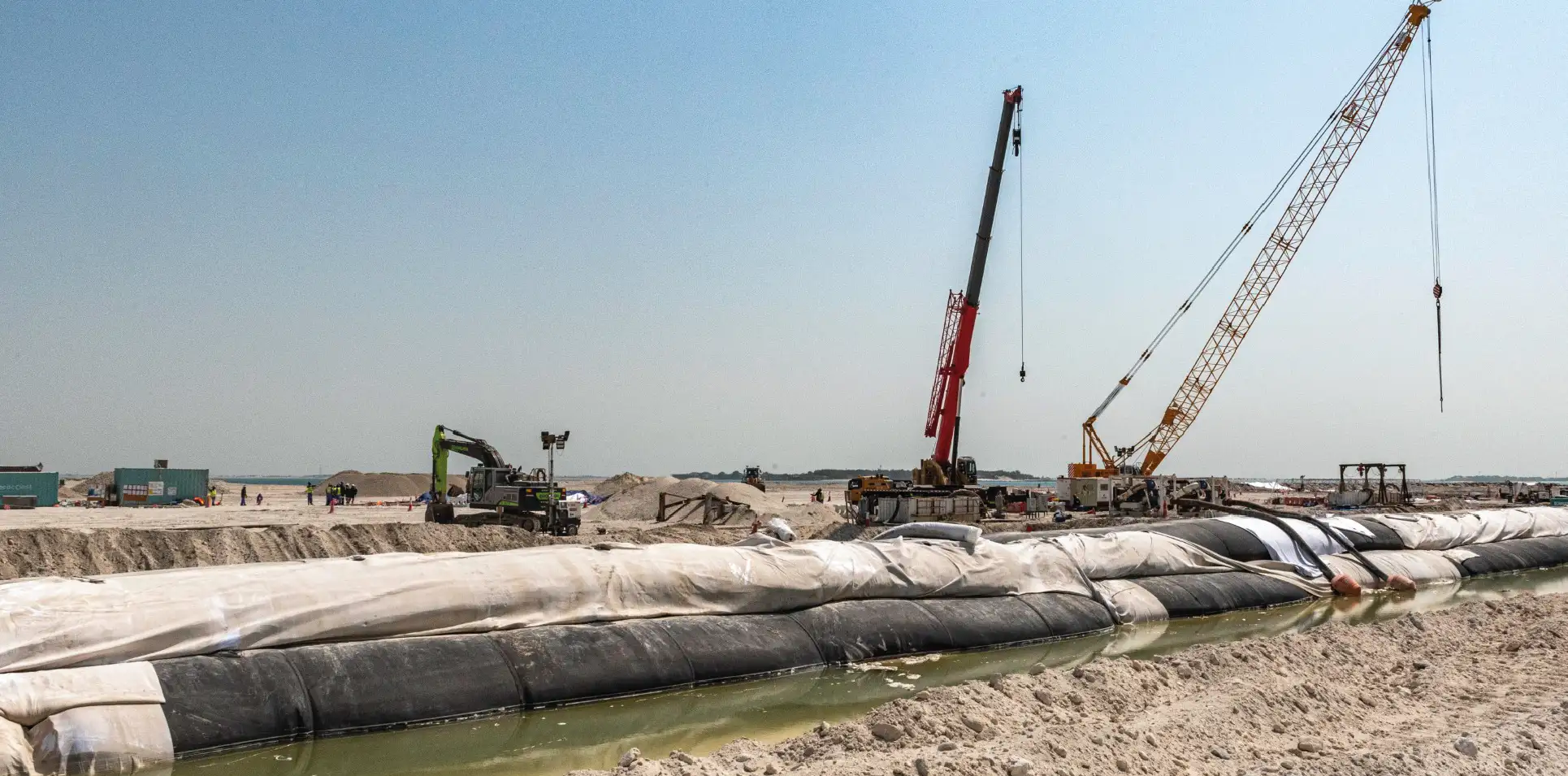
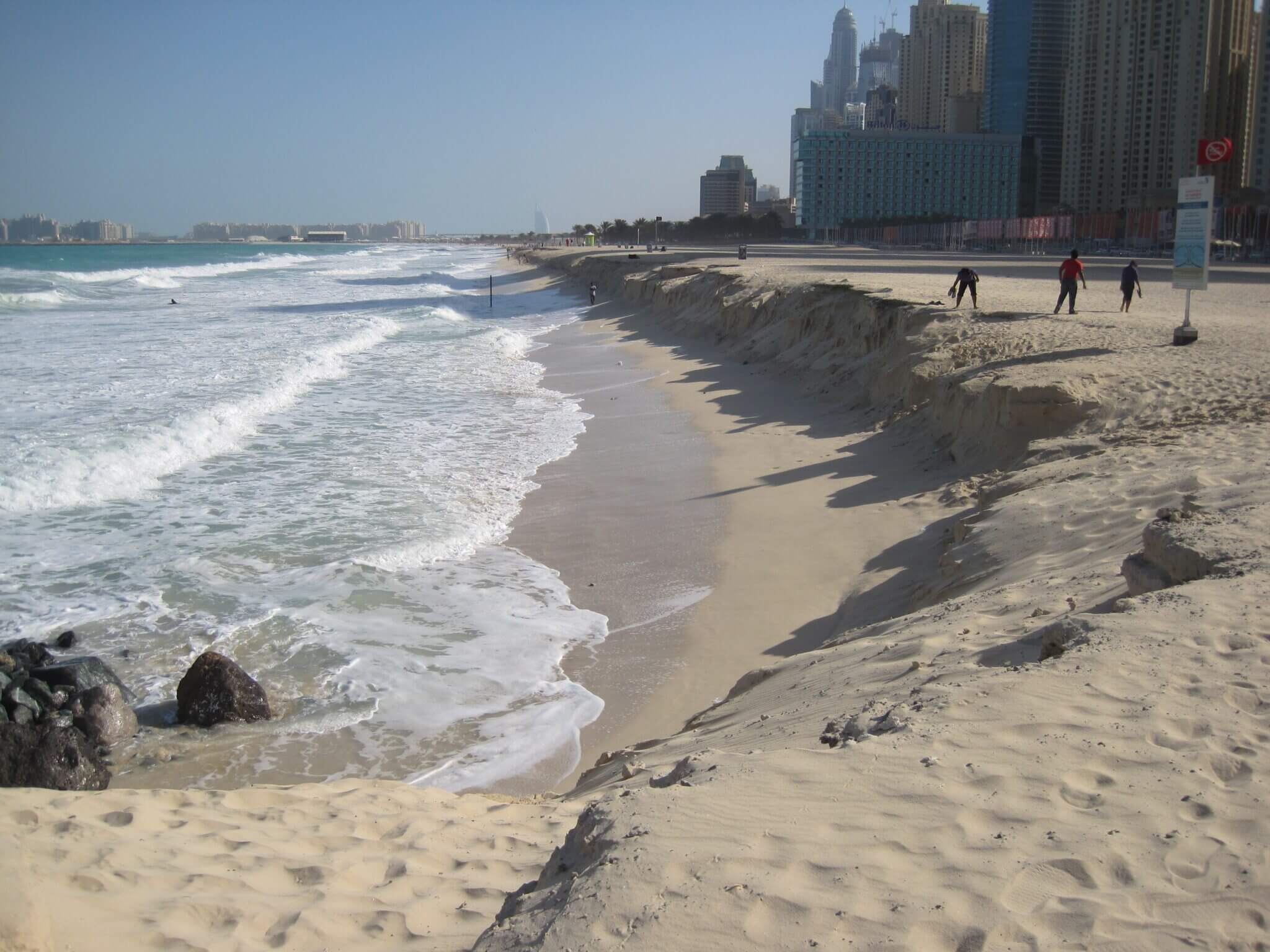
Coastal erosion is no longer a distant threat. With over 70% of the world’s coastlines currently eroding and sea levels continuing to rise, the demand for resilient coastal protection has never been higher. Traditionally, the industry has relied on quarry-sourced rock structures. However, as the world moves towards a net-zero future, marine contractors and developers are seeking smarter, more sustainable alternatives.
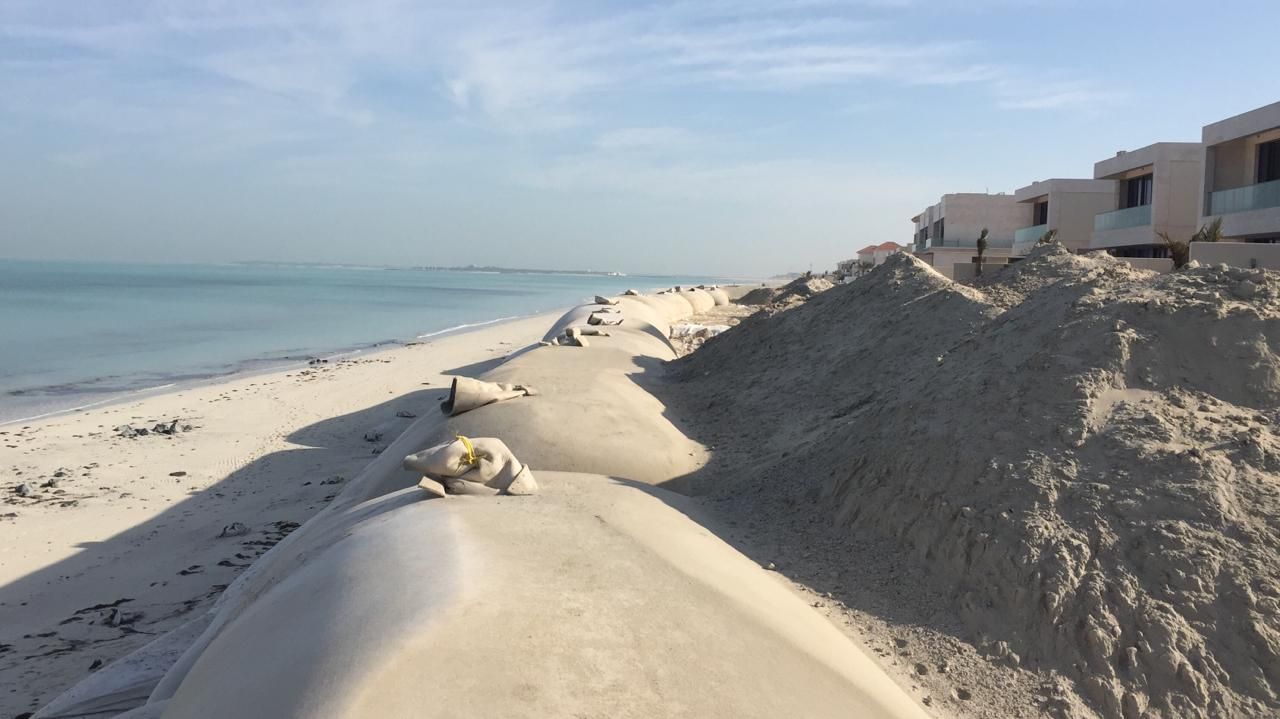
At Ecocoast, we’re leading this shift with Coastal Protection Containers (CPCs). These precision-engineered, sand-filled geotextile units are proving that you don’t have to choose between engineering stability and environmental stewardship.
For decades, rock revetments and breakwaters were the only viable solution for high-energy marine environments. But traditional rock comes with significant “hidden” costs:
High carbon footprint: The quarrying and long-haul transport of heavy rock contribute significantly to CO2 emissions.
Logistical complexity: Mobilizing large barges and heavy equipment often leads to long lead times and high mobilization costs.
Rigid design: Once placed, rock structures are difficult to adjust or remove without major environmental disruption.
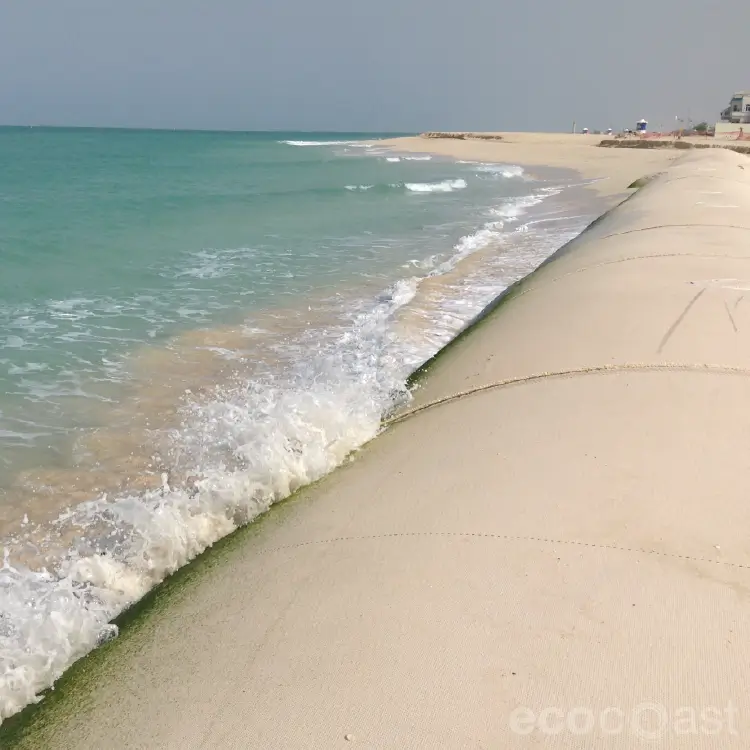
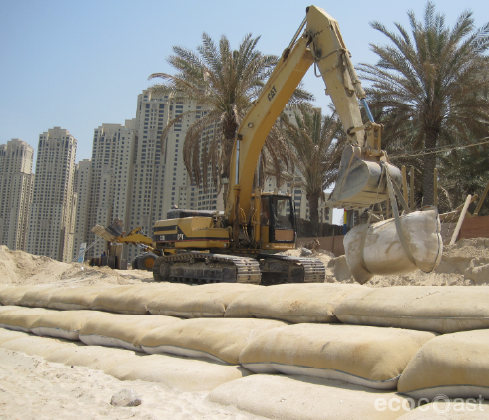
CPCs are high-strength geotextile containers designed to be hydraulically filled with local sand. Ranging from 600kg to over 800 tonnes, these units act as a sustainable “core” or “armor” for various coastal applications.
1️⃣ 98% reduction in CO2 emissions
The most significant advantage of CPCs is their environmental impact. By using locally sourced sand instead of quarried rock, project owners can reduce the carbon footprint of their coastal protection by up to 98%. This is a game-changer for developers aiming for green building certifications or corporate sustainability goals.
2️⃣ Accelerated construction timelines
Time is money in marine construction. Our data shows that CPCs allow for 25% faster installation compared to traditional rock. Because the containers can be filled on-site, logistics are streamlined. Furthermore, CPCs allow for parallel deployment. You can install and fill units simultaneously, significantly reducing weather-window risks.
3️⃣ Significant cost savings
On average, CPC solutions can be 60% less expensive than traditional rock. This 2.5x cost saving comes from reduced transport costs, lower mobilization fees, and the ability to use local resources (sand) rather than purchasing and hauling expensive quarry stone.
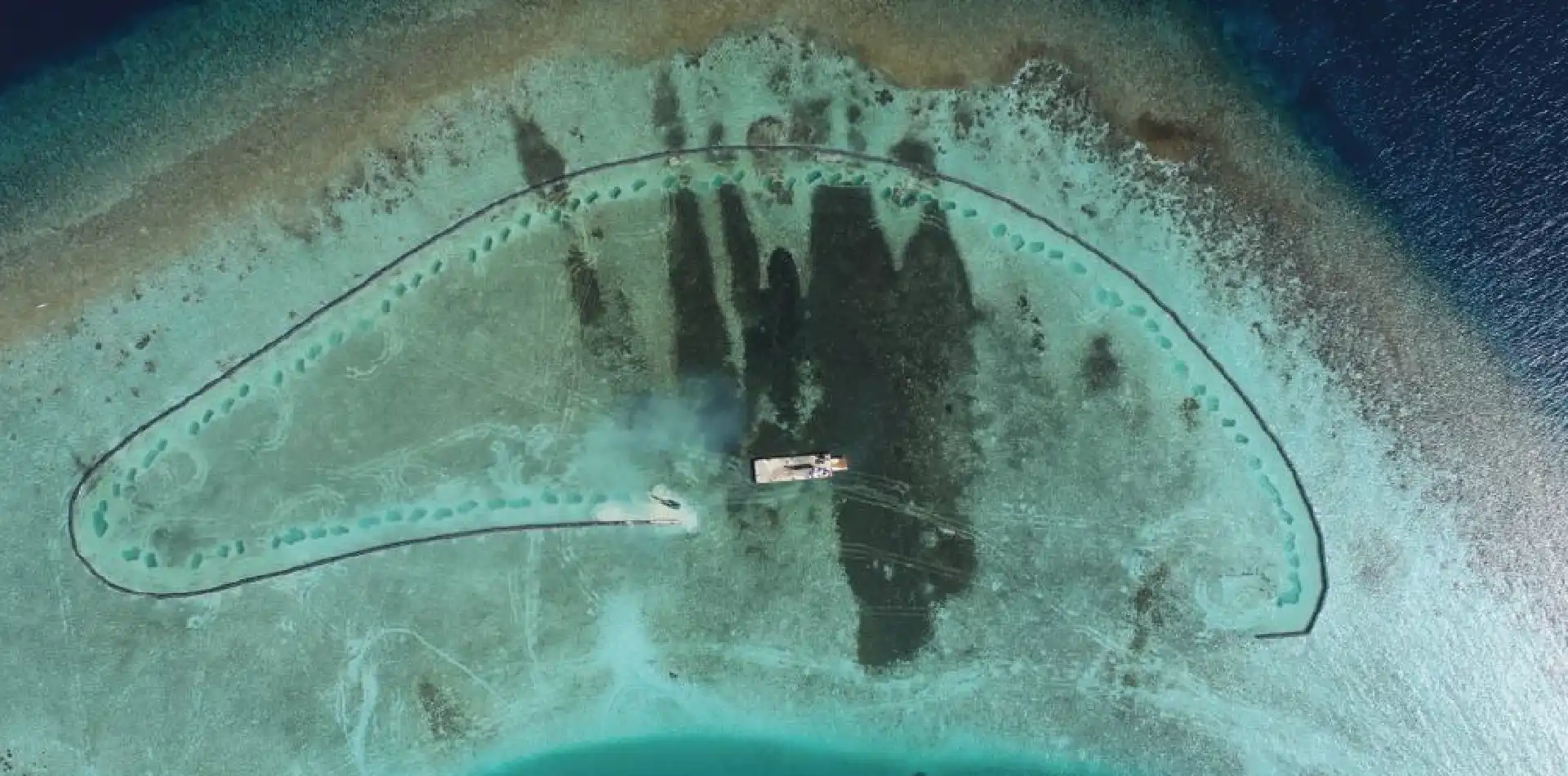
In a recent project for a private island situated in a high wave energy environment, the challenge was to build a resilient buried revetment that wouldn’t compromise the island’s natural aesthetic or environmental integrity.
The traditional rock proposal was deemed too carbon-intensive and logistically complex. By switching to CPCs, the project achieved:
Design stability: Validated performance under extreme wave conditions.
Minimal footprint: A smaller construction footprint that protected the island’s delicate marine ecosystem.
Efficiency: Faster mobilization meant the island’s development stayed on schedule despite the remote location.
One of the reasons CPCs are becoming the preferred choice for marine contractors is their flexibility. They are not limited to just revetments. Key applications include:
Submerged breakwaters: Protecting beaches while remaining invisible to the eye.
Artificial reefs: Enhancing marine biodiversity while providing coastal defense.
Beach toes: Preventing shoreline recession and stabilizing dune systems.
Groynes: Controlling sediment transport with a smaller environmental impact.
As international treaties like the BBNJ (High Seas Treaty) bring more scrutiny to how we treat our oceans, the marine construction industry must evolve. Moving away from carbon-heavy rock toward sand-filled technology is a practical, proven and profitable way to meet these new standards.
Good environmental planning is no longer a “bolt-on”. It’s the foundation of a successful project. By choosing Coastal Protection Containers, you aren’t just protecting a shoreline. You’re investing in the long-term health of our oceans.
–
Stop overpaying for coastal protection! If you’re planning a similar project, don’t settle for the high costs and carbon footprint of traditional rock. Let our engineers show you how to achieve a 2.5x cost saving. Request a CPC technical consultation here.
Share:

CPCs are significantly more economical, offering up to 60% cost savings compared to traditional rock solutions. This is primarily due to reduced mobilization costs and the use of locally sourced fill materials, which can make the overall project up to 2.5x less expensive.
Yes. CPCs are precision-engineered for stability and have been validated under high wave energy conditions. Their flexibility allows them to absorb wave energy more effectively than rigid structures in certain coastal profiles.
By eliminating the need for quarrying and long-haul heavy transport, CPCs can achieve a 98% reduction in CO2 emissions compared to rock breakwaters, provided the sand is sourced locally.
Unlike traditional materials that can take years to integrate, both woven and unwoven CPC surfaces attract biodiversity quickly. Real reef-like environments, including algae communities, fish shoals and invertebrates, typically begin to form within months of installation.
Typically, yes. CPC projects can be delivered 25% faster than rock-based alternatives. This efficiency comes from faster mobilization and the ability to perform parallel installation, where containers are deployed and hydraulically filled on-site simultaneously.
CPCs are highly scalable to meet project-specific needs, with sizes ranging from 600 kg to over 800 tonnes.
CPCs are significantly more economical, offering up to 60% cost savings compared to traditional rock solutions. This is primarily due to reduced mobilization costs and the use of locally sourced fill materials, which can make the overall project up to 2.5x less expensive.
Yes. CPCs are precision-engineered for stability and have been validated under high wave energy conditions. Their flexibility allows them to absorb wave energy more effectively than rigid structures in certain coastal profiles.
By eliminating the need for quarrying and long-haul heavy transport, CPCs can achieve a 98% reduction in CO2 emissions compared to rock breakwaters, provided the sand is sourced locally.
Unlike traditional materials that can take years to integrate, both woven and unwoven CPC surfaces attract biodiversity quickly. Real reef-like environments, including algae communities, fish shoals and invertebrates, typically begin to form within months of installation.
Typically, yes. CPC projects can be delivered 25% faster than rock-based alternatives. This efficiency comes from faster mobilization and the ability to perform parallel installation, where containers are deployed and hydraulically filled on-site simultaneously.
CPCs are highly scalable to meet project-specific needs, with sizes ranging from 600 kg to over 800 tonnes.





 Prev Blog