Ready to green your grey infrastructure? Discover Ecoreef →
1,333,018 Meters OF MARINE BARRIERS AND COUNTING  LIVE
LIVE
Solutions for marine pollution control, coastal and shoreline protection to effectively address environmental concerns.
View All Products
Solutions for the protection of critical infrastructure and other high-security areas.
View All Products
End-to-end solutions for environmental protection, safety and security applications that protect, monitor and regenerate marine environments.
View All Solutions
End-to-end marine and engineering services designed to ensure high-performing projects.
View All Services
Industry-focused expertise delivering proven solutions for coastlines and waterways, from initial concept to long-term operation and protection.
View All Industries

Solutions for marine pollution control, coastal and shoreline protection to effectively address environmental concerns.
View All Products
Solutions for the protection of critical infrastructure and other high-security areas.
View All Products
End-to-end solutions for environmental protection, safety and security applications that protect, monitor and regenerate marine environments.
View All Solutions
End-to-end marine and engineering services designed to ensure high-performing projects.
View All Services
Industry-focused expertise delivering proven solutions for coastlines and waterways, from initial concept to long-term operation and protection.
View All Industries

Share:


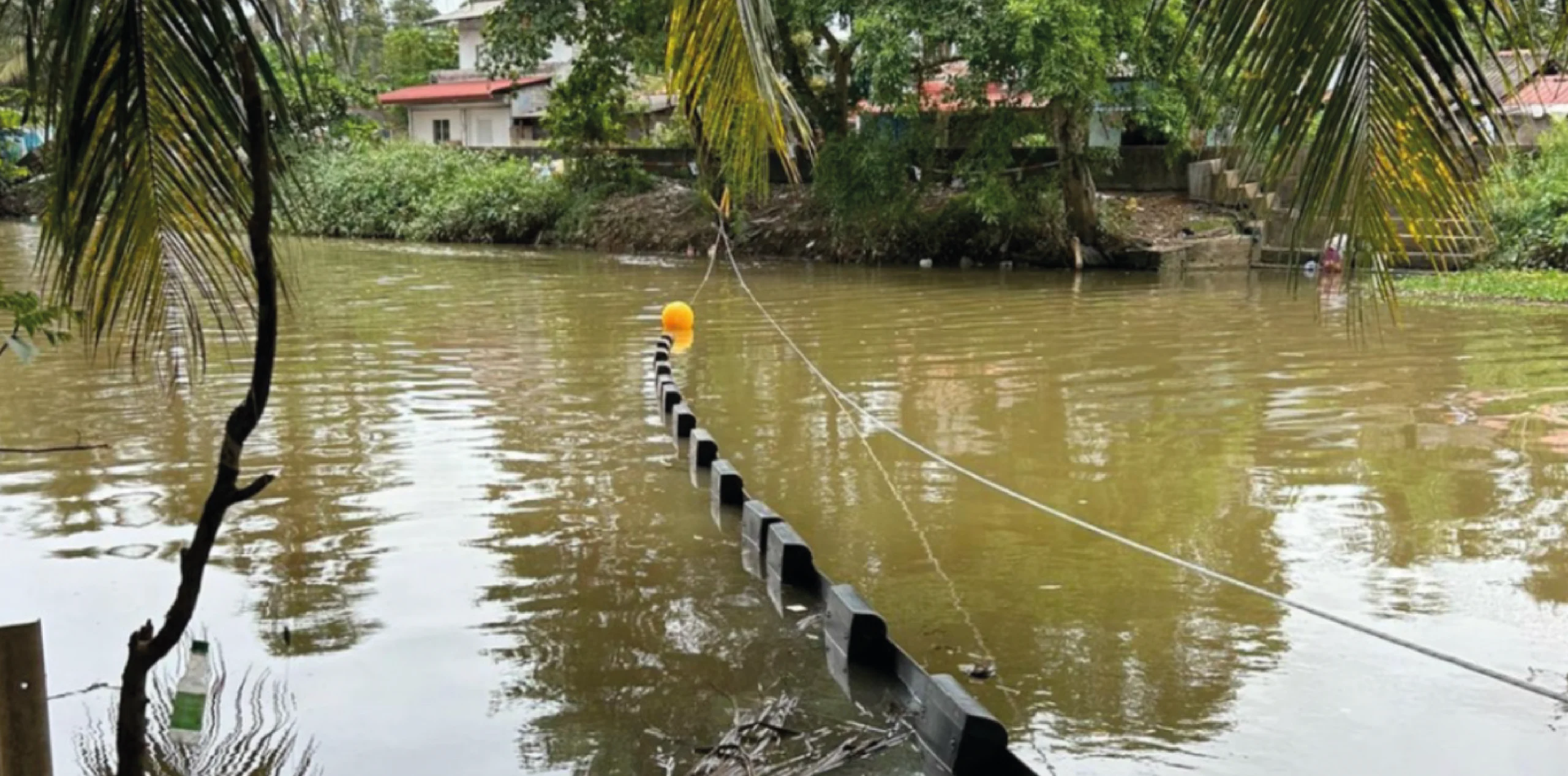
Sri Lanka’s rivers carry a growing volume of plastic waste toward the ocean. To intercept, the National Aquatic Resources Research and Development Agency (NARA) led a large-scale debris boom deployment, with support from Cefas‘ Ocean Country Partnership Programme (OCPP) team.
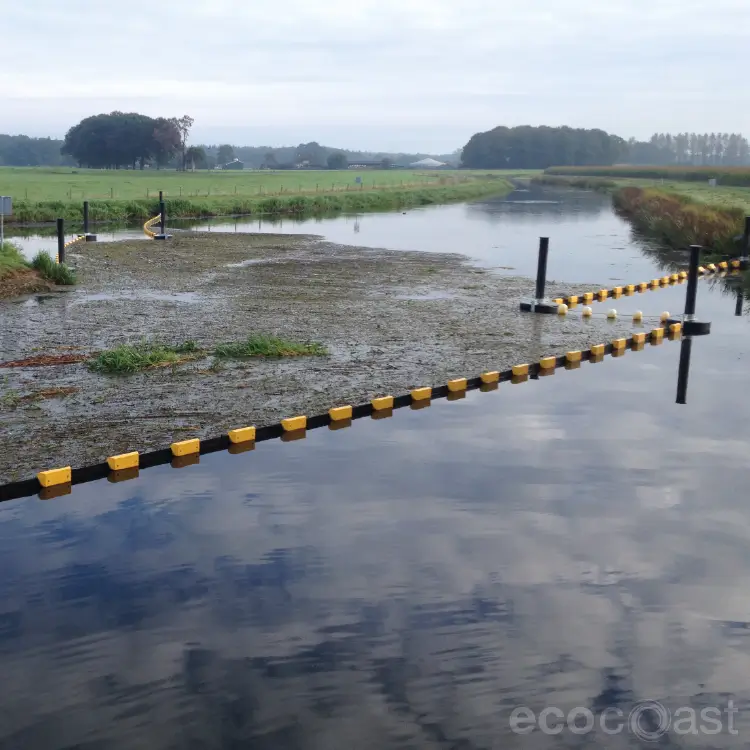
The project ultimately placed two debris booms across two sites: a shorter boom on the Kelani River, the originally planned location, and a longer boom on the Ja-Ela River, added after unseasonal rainfall affected conditions. Both booms share the same objective: capturing large debris flowing downriver and collecting data on plastic waste entering the ocean.
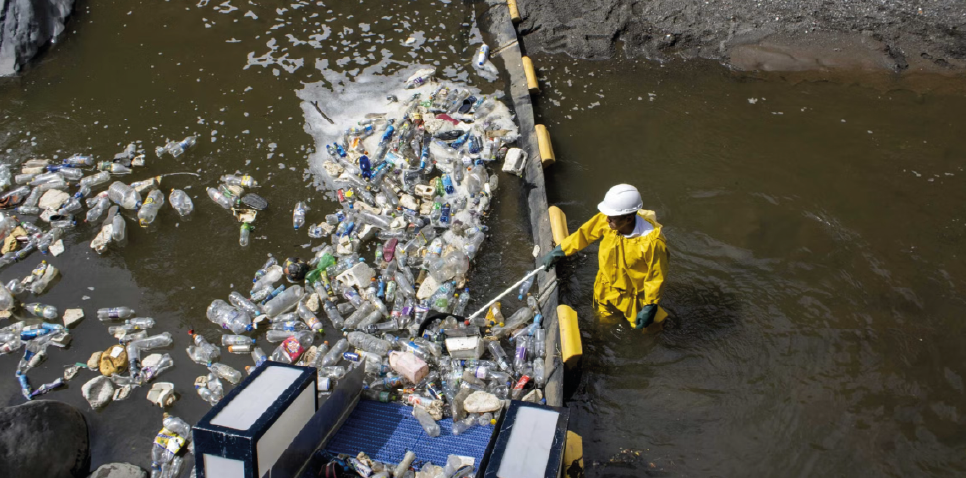
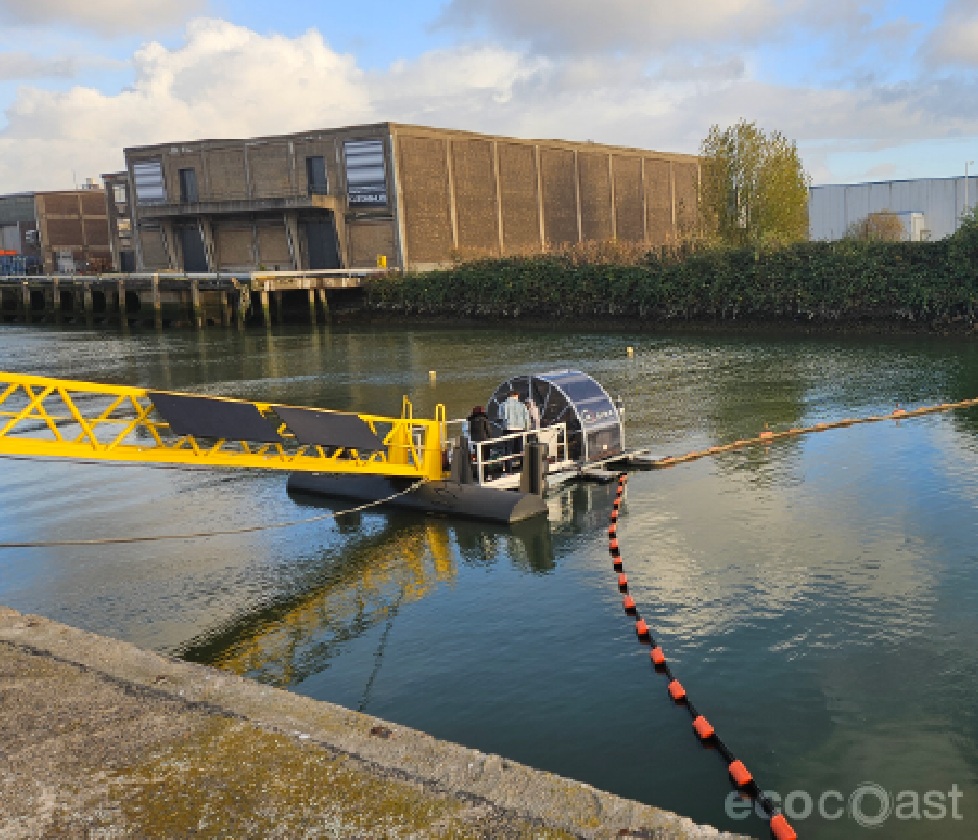
Ecocoast supplied the debris boom for both sites. Each boom intercepts waste before it reaches the open ocean, preventing further harm to marine ecosystems. The boom not only serves as a physical barrier, but also acts as a monitoring tool. It provides insights into the composition and volume of litter traveling down the river. This data is essential for understanding the sources and trends of plastic pollution, which can inform targeted strategies to reduce its impact.
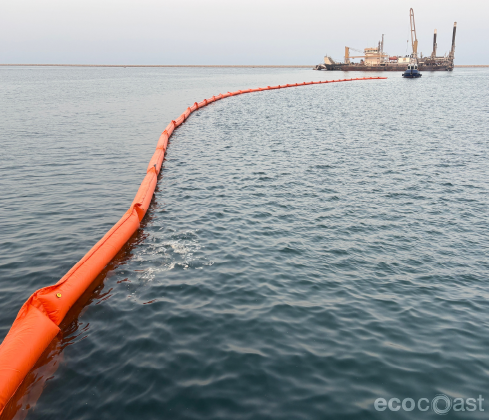
At the heart of this project is the Bolina Permanent Debris Boom, a flush-faced, full-depth barrier engineered for long-term use in rivers, canals and coastal areas. Unlike traditional float-and-skirt designs, its continuous curtain leaves no gap at the surface or below the waterline, so debris cannot slip underneath and snag unpredictably. Durable materials resist UV exposure, abrasion and harsh weather, keeping the boom functional over extended periods.
The design of the boom allows for continuous water flow while capturing and retaining large debris, such as plastic bottles, tree branches and other waste materials. Its modular construction facilitates easy installation and maintenance, making it a versatile choice for different pollution control projects. By using the Bolina Permanent Debris Boom, this initiative not only tackles immediate waste management needs. It also supports long-term efforts to reduce plastic pollution and protect marine life. Pioneered by Bolina, part of Ecocoast since 2020, this flush-faced design is now the solution the industry benchmarks against.
NARA originally selected the Kelani River for this project because it supplies 80% of Colombo’s water. High pollution levels there threaten both the environment and public health, making plastic waste a priority for improving local livelihoods. When unseasonal rainfall affected deployment conditions, the team added a second, longer boom on the Ja-Ela River rather than abandoning the Kelani site. So, both rivers now benefit from active debris interception, and monitoring continues to track pollution levels across both locations.
By intercepting debris before it reaches the ocean, the project contributes directly to improving water quality and reducing the environmental footprint of plastic pollution. The insights gained from analyzing the collected litter are expected to guide future actions for minimizing pollution and rehabilitating affected waterways. For local communities, a cleaner river means healthier ecosystems, improved fishing conditions and safer water resources, benefiting both the environment and people’s livelihoods.
This collaborative initiative marks a significant step in tackling plastic pollution in Sri Lanka’s rivers. By deploying advanced technologies like the Bolina Permanent Debris Boom, supported by strategic partnerships with organizations such as Cefas and NARA, the project sets an example for effective river pollution management. It demonstrates how combining innovative tools with scientific research can lead to meaningful and sustainable environmental improvements.
Moreover, this effort directly contributes to the United Nations Sustainable Development Goals (SDGs), especially SDG 17: Partnerships for the Goals. By fostering collaboration between local and international organizations, the project emphasizes the importance of collective action to achieve shared environmental objectives. Through partnerships, it leverages resources and expertise to combat plastic pollution, enhance river health and work towards a sustainable future.
For more insights on the deployment of our Bolina Permanent Debris Boom, check out this article from Ceylon Today, which discusses NARA’s initiative to anchor a litter boom across the Kelani River. Read the full article here.
Additionally, you can read about the Ocean Country Partnership Programme’s efforts in Sri Lanka, which highlight the ongoing initiatives aimed at tackling marine pollution and supporting sustainable practices. Explore the Ocean Country Partnership Programme (OCPP) blog here.
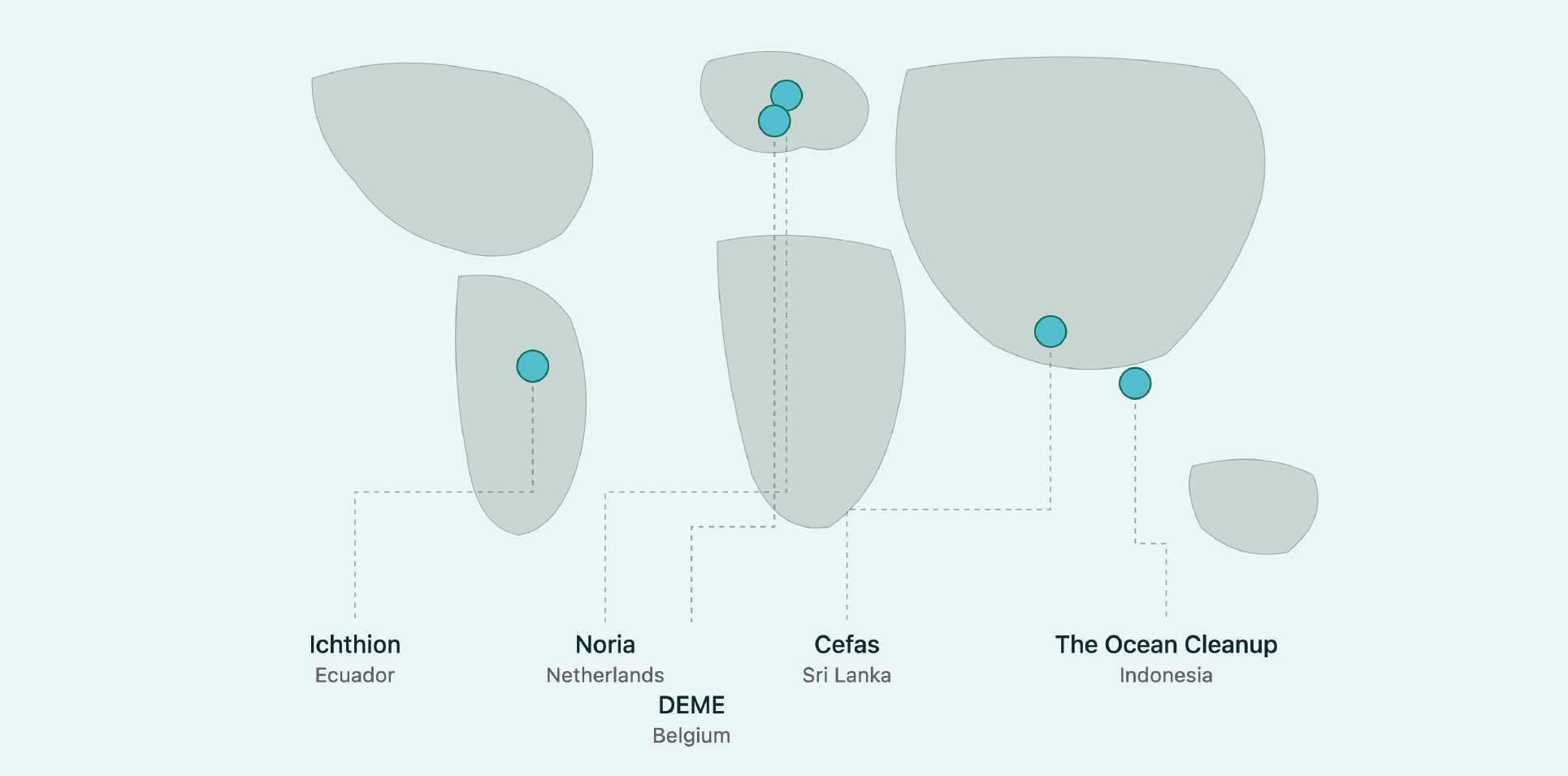
This project is one of several Ecocoast has undertaken with partners around the world to intercept plastic before it reaches the ocean. See how similar work is unfolding in Ecuador, the Netherlands, Belgium, and beyond in our overview of five global partnerships protecting the world’s waterways.
Share:

NARA and Cefas' OCPP team deployed the Bolina Permanent Debris Boom, supplied by Ecocoast, across two sites: the Kelani River and the Ja-Ela River.
The project originally planned a single deployment on the Kelani River. Unseasonal rainfall affected conditions there, so the team added a longer boom on the Ja-Ela River rather than relocating the project entirely. Both rivers now have active debris interception in place.
The boom uses a flush-faced curtain design with no gap at the surface or below the waterline, allowing continuous water flow while capturing and retaining large floating debris such as plastic bottles and tree branches.
Beyond physical containment, the boom acts as a monitoring tool, providing insights into the composition and volume of litter traveling downriver – data that helps researchers understand the sources and trends of plastic pollution.
NARA and Cefas' OCPP team deployed the Bolina Permanent Debris Boom, supplied by Ecocoast, across two sites: the Kelani River and the Ja-Ela River.
The project originally planned a single deployment on the Kelani River. Unseasonal rainfall affected conditions there, so the team added a longer boom on the Ja-Ela River rather than relocating the project entirely. Both rivers now have active debris interception in place.
The boom uses a flush-faced curtain design with no gap at the surface or below the waterline, allowing continuous water flow while capturing and retaining large floating debris such as plastic bottles and tree branches.
Beyond physical containment, the boom acts as a monitoring tool, providing insights into the composition and volume of litter traveling downriver – data that helps researchers understand the sources and trends of plastic pollution.






 Prev Blog