Ready to green your grey infrastructure? Discover Ecoreef →
1,333,018 Meters OF MARINE BARRIERS AND COUNTING  LIVE
LIVE
Solutions for marine pollution control, coastal and shoreline protection to effectively address environmental concerns.
View All Products
Solutions for the protection of critical infrastructure and other high-security areas.
View All Products
End-to-end solutions for environmental protection, safety and security applications that protect, monitor and regenerate marine environments.
View All Solutions
End-to-end marine and engineering services designed to ensure high-performing projects.
View All Services
Industry-focused expertise delivering proven solutions for coastlines and waterways, from initial concept to long-term operation and protection.
View All Industries

Solutions for marine pollution control, coastal and shoreline protection to effectively address environmental concerns.
View All Products
Solutions for the protection of critical infrastructure and other high-security areas.
View All Products
End-to-end solutions for environmental protection, safety and security applications that protect, monitor and regenerate marine environments.
View All Solutions
End-to-end marine and engineering services designed to ensure high-performing projects.
View All Services
Industry-focused expertise delivering proven solutions for coastlines and waterways, from initial concept to long-term operation and protection.
View All Industries

Share:


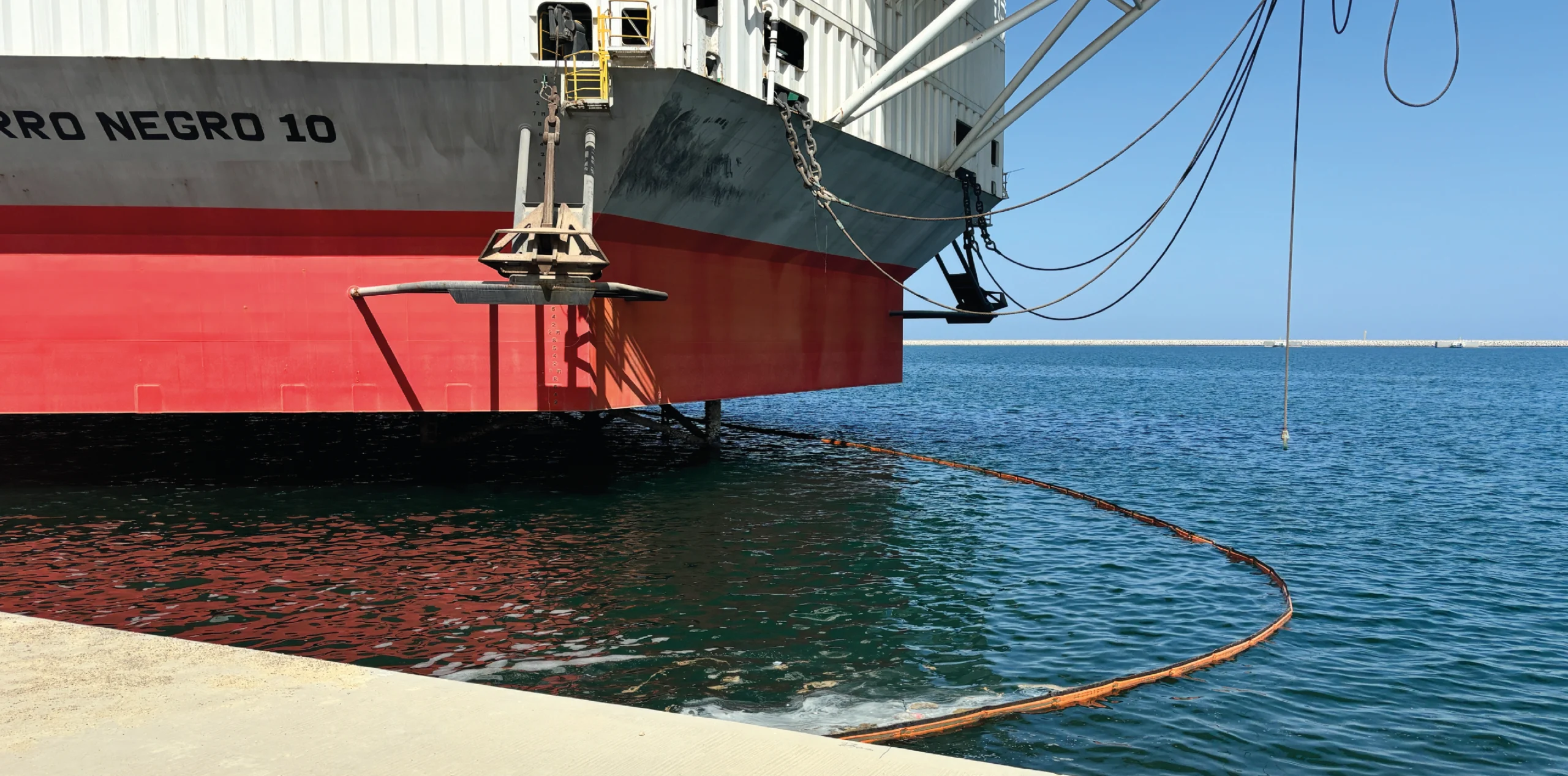
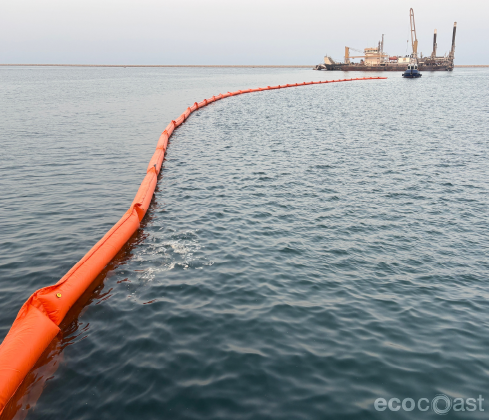
In nearshore oil spill management, the risk of pollution entering the marine environment is a constant concern. This is especially true in coastal industrial zones linked to oil and gas operations. Recently in Saudi Arabia, we partnered with a client in the Eastern Province to put a preventive solution in place. We installed an oil containment boom around a nearshore oil rig to help protect the surrounding waters. The close proximity to sensitive coastal environments and local communities meant that even a small spill could have significant environmental and social consequences.
In November 2024, Saudi Aramco temporarily suspended operations of the Perro Negro 10 jack-up drilling rig. The rig remained in Saudi Arabian waters, specifically within the Arabian Gulf in the Eastern Province. It is home to a major industrial port and rapidly developing industrial city.
The Eastern Province itself is primarily an industrial hub focused on mining, metals and maritime infrastructure. However, it is situated within a region that includes sensitive marine environments, such as coral reefs, mangroves and coastal habitats. This means that Perro Negro 10, while suspended, was positioned relatively close to Saudi Arabia’s coastline. Consequently, it was also within reach of sensitive marine and coastal ecosystems.
Given these factors, any oil spill or discharge from Perro Negro 10 during this period would have posed a heightened risk. Nearby shorelines and ecologically sensitive areas were especially vulnerable. This made nearshore oil spill management and environmental protection a top priority for the site.
As Perro Negro 10 prepared for its drilling campaign in Mexico, the client needed a preventive containment system. This system would protect the nearby marine areas. They were looking for a simple yet effective way to ensure compliance. They also wanted to reduce response times in case of a leak or surface spill.
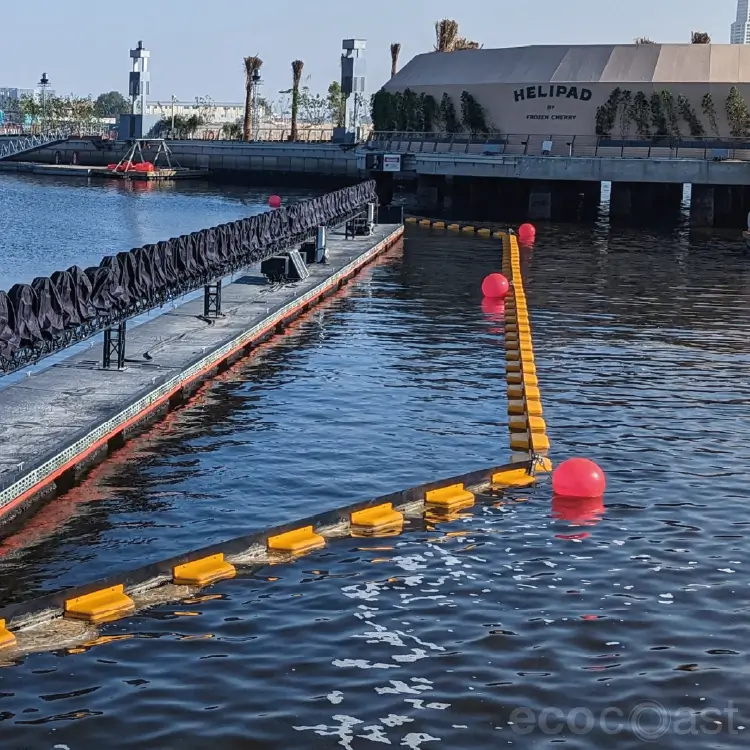
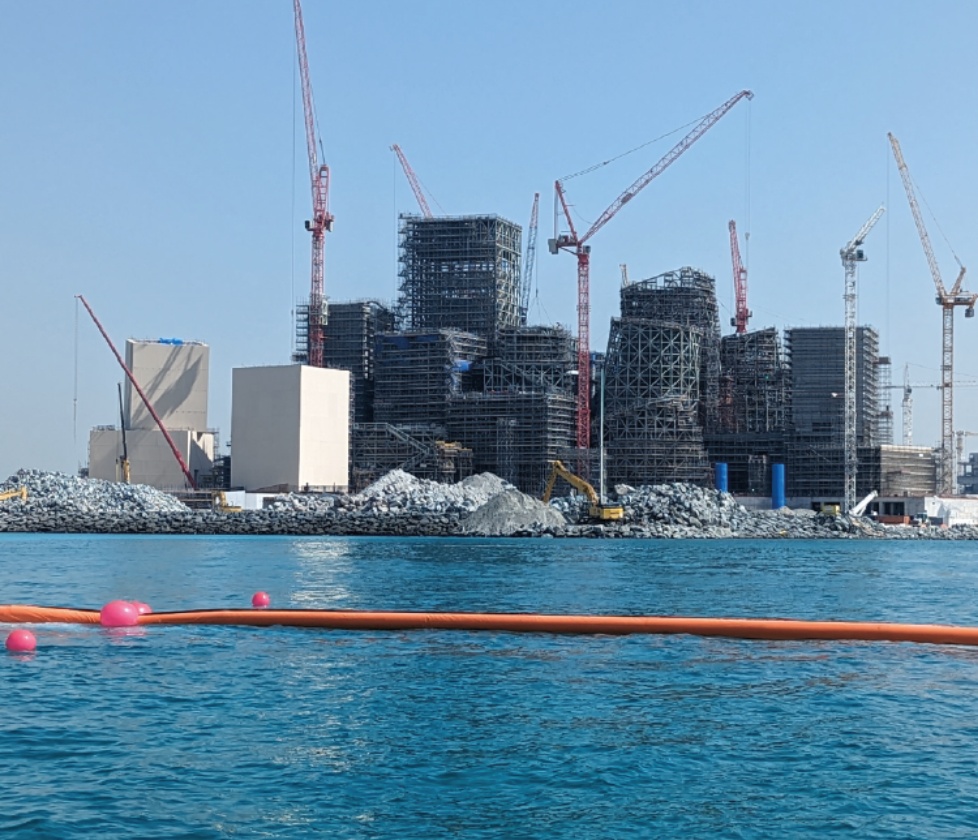
To address these challenges, we installed an oil containment boom – Ecobarrier Fence Oil Boom – around Perro Negro 10. This preventive barrier creates a physical blockade on the water’s surface, effectively containing any accidental oil discharges and preventing them from spreading into surrounding marine areas. The containment boom not only helps protect sensitive coastal environments, but it also streamlines spill response operations. As a result, it significantly reduces response times and potential cleanup costs.
By implementing this simple yet highly effective containment system, the client has taken a proactive step toward environmental stewardship, regulatory compliance and operational safety at the nearshore drilling site. This approach demonstrates a commitment to sustainable operations and sets a benchmark for oil spill prevention in the industry.
This proactive containment strategy offers multiple benefits:
✅ Prevents surface pollutants from drifting toward sensitive areas.
✅ Helps the client meet environmental and regulatory requirements.
✅ Reduces cleanup time and costs in the event of a spill.
✅ Allows operations to continue with minimal disruption.
Custom-engineered for the site, the containment barrier was installed efficiently and securely, even in the shallow, tidal conditions common to nearshore facilities.
While the installation of a high-performance oil containment boom provided robust protection for the Perro Negro 10 site, there are additional technologies we offer that could further strengthen any nearshore oil spill prevention strategy.
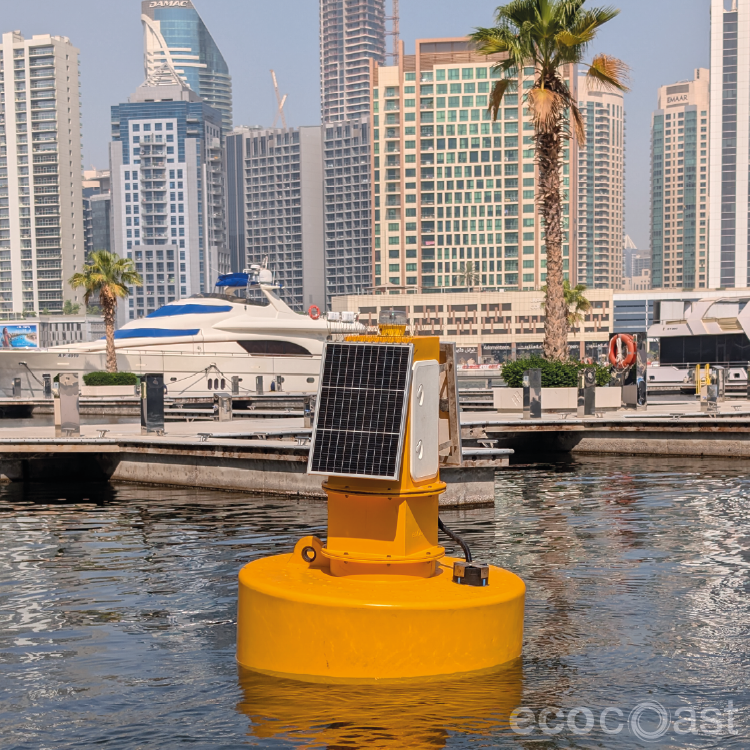
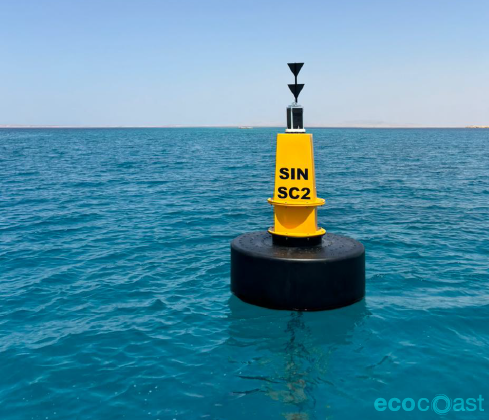
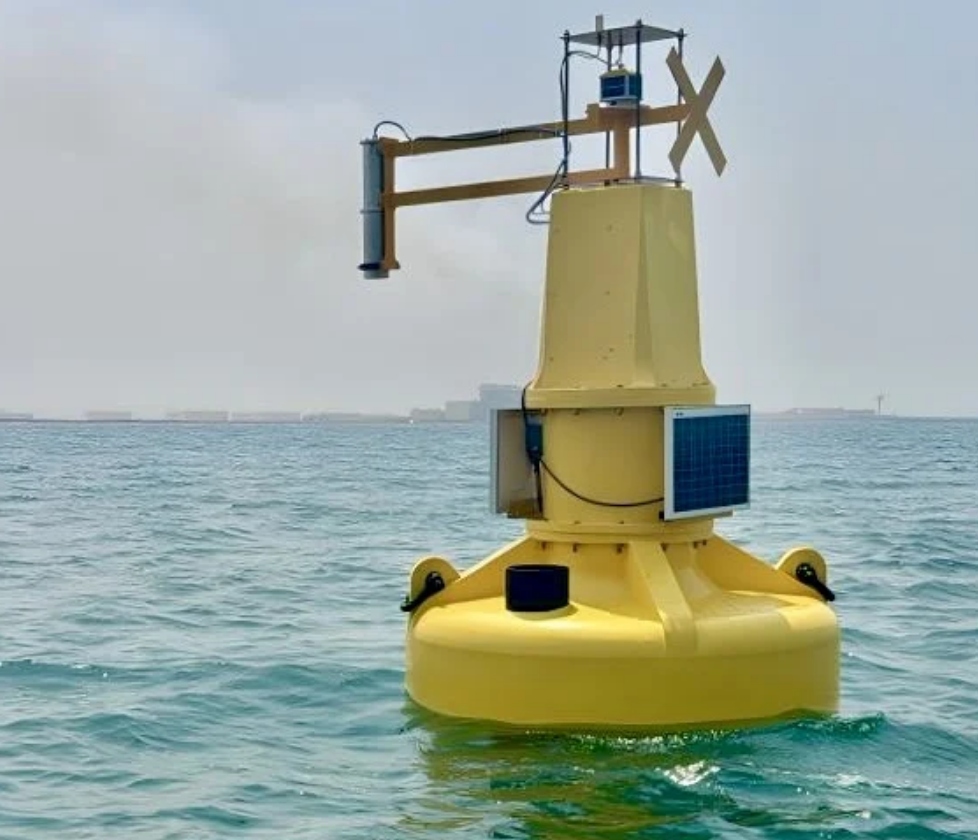
To elevate environmental protection even further, we recommend the deployment of our Water Quality Monitoring (WQM) buoys. These advanced buoys are equipped with real-time sensors designed to continuously monitor for signs of oil or chemical contamination in the water. By providing instant alerts at the first sign of a spill, these buoys enable operators to respond even faster, minimizing environmental impact and ensuring full compliance with regulatory standards.
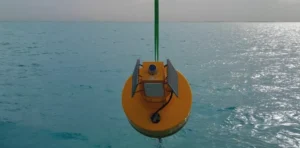 Advantages of Water Quality Monitoring Buoys:
✅ Early detection of oil spills or leaks.
✅ Continuous, real-time data on water quality.
✅ Automated alerts for rapid response.
✅ Improve regulatory compliance and reporting.
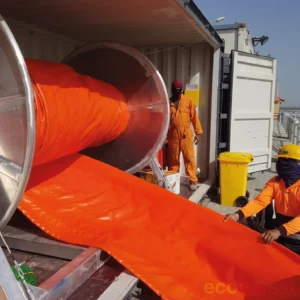
For sites requiring fast and efficient containment, we also offer boom reels. This specialized equipment allows you to rapidly deploy and retrieve oil containment booms. Boom reels let you quickly position or remove barriers as operational needs change. Hence, this maximizes both safety and efficiency during oil spill response operations.
By implementing a nearshore oil containment solution, our client turned a potential vulnerability into a position of strength. This shows how environmental protection and operational efficiency can go hand-in-hand.
–
Need to protect your nearshore oil facility or coastal project?
Let’s talk about how our oil spill containment solutions can help you meet environmental goals before problems arise. Whether your operation is nearshore, inland or coastal, we can help you design a proactive oil spill containment strategy. Furthermore, we can also help you implement solutions that meet local regulations. Our approach protects what matters most.
Contact us today to discuss your site’s unique needs and discover how our solution-driven approach can safeguard your operations and the environment.
Share:

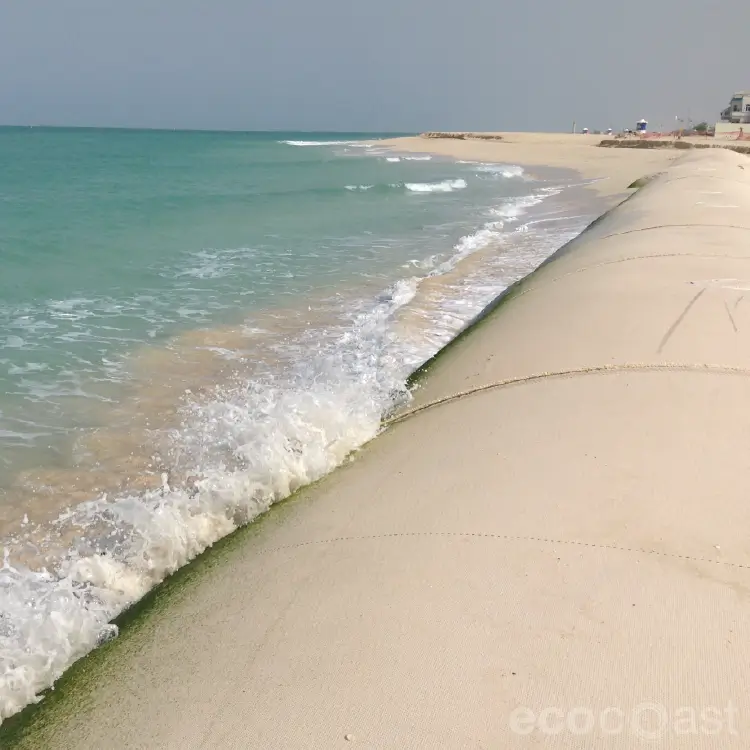
Ecocoast offers a range of oil booms tailored to nearshore settings, including Fence, Solid Flotation, Harbour, Inflatable and Beach Sealing Oil Booms. Each type serves specific water conditions and deployment needs:
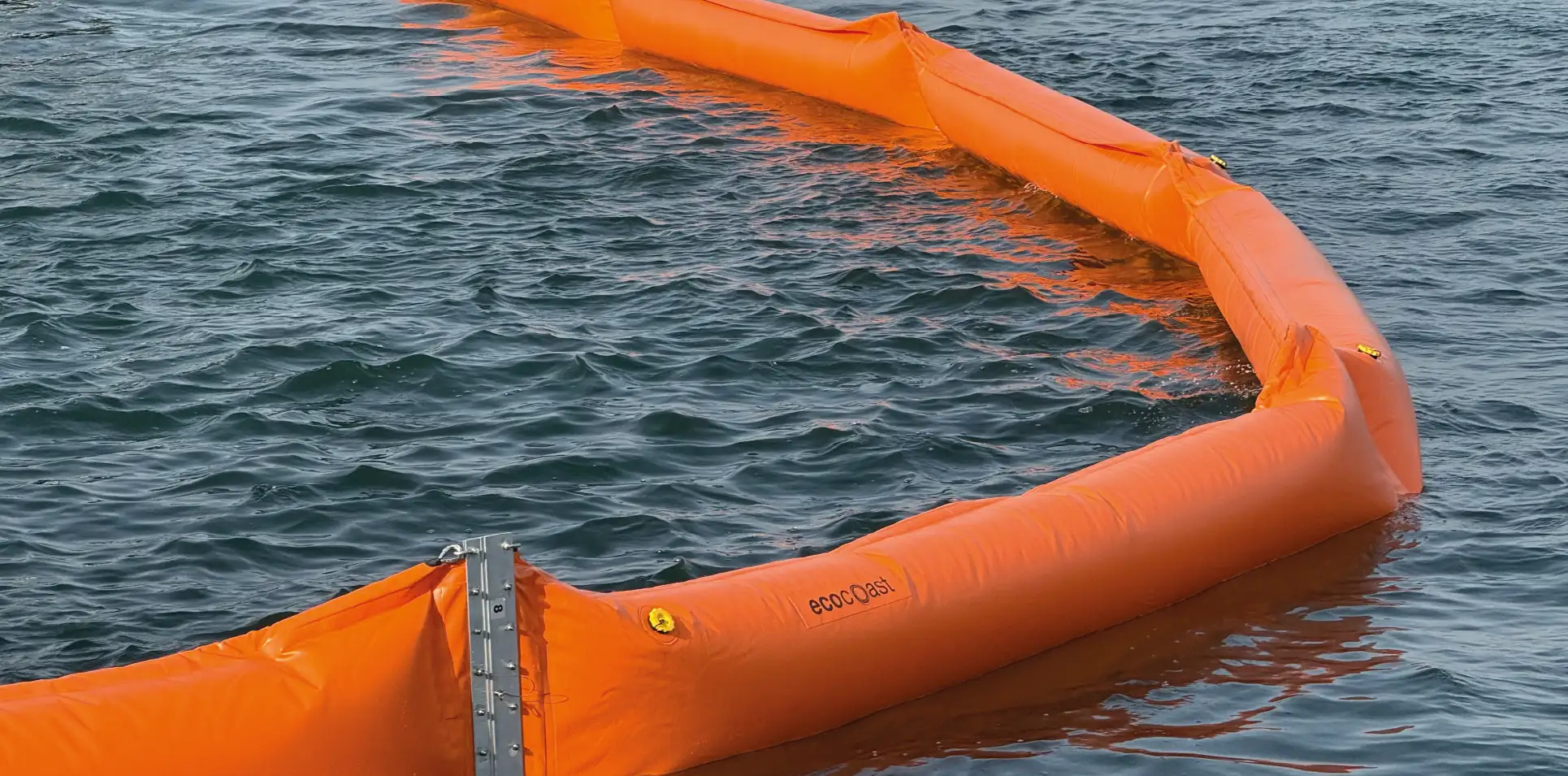
Ecobarrier Fence Oil Booms function effectively in shallow, tidal nearshore conditions through a specialized design optimized for low-energy environments. Their flat-panel structure with closed-cell foam floats provides reliable buoyancy while preventing water absorption, ensuring stability in shallow waters. The UV-stabilized PVC membrane offers durability against sun exposure and saltwater corrosion, critical for tidal areas with fluctuating water levels.
Ecocoast can deploy containment solutions extremely quickly during a spill, thanks to lightweight, rapid-response designs such as inflatable oil booms. These booms can be stored compactly on boom reels, allowing for fast, efficient deployment in emergency situations, often much faster than traditional oil booms.
Early installation of oil containment booms delivers significant environmental benefits by immediately limiting the spread of oil and other pollutants, preventing them from reaching sensitive shorelines, wetlands and marine habitats where cleanup is more difficult and ecological damage can be long-lasting. By acting as a first line of defense, early containment protects vulnerable species and ecosystems, reduces the area affected by the spill and makes cleanup faster and more effective.
While the main floating booms physically contain oil, Ecocoast’s broader suite includes Water Quality Monitoring (WQM) buoys. These continuously detect oil or chemical anomalies, issuing instant alerts when thresholds are breached. These warnings enable quick action – such as deploying inflatable emergency booms – to prevent the spread and avoid serious environmental or regulatory issues. The continuous data provided helps teams adjust containment strategies in real time, maximizing environmental protection and minimizing cleanup costs.
At Ecocoast, end-of-life management is guided by a strong commitment to sustainability and responsible resource use as part of the Ecocoast 4Ds framework. Instead of sending products to landfill, marine barriers and solutions are properly removed, repaired or recycled to minimize environmental impact. We actively support clients in diverting products from landfill, reinforcing our mission to deliver long-term, sustainable solutions for coastal and marine protection.
WQM buoys continuously monitor water quality and automatically trigger alerts when contamination is detected. These alerts are directly linked to standard operating procedures, such as initiating boom deployment, notifying emergency response teams or escalating the situation to authorities. This integration ensures that detection leads immediately to containment actions, enabling a rapid and coordinated response to water quality incidents.
Ecocoast offers a range of oil booms tailored to nearshore settings, including Fence, Solid Flotation, Harbour, Inflatable and Beach Sealing Oil Booms. Each type serves specific water conditions and deployment needs:
Ecobarrier Fence Oil Booms function effectively in shallow, tidal nearshore conditions through a specialized design optimized for low-energy environments. Their flat-panel structure with closed-cell foam floats provides reliable buoyancy while preventing water absorption, ensuring stability in shallow waters. The UV-stabilized PVC membrane offers durability against sun exposure and saltwater corrosion, critical for tidal areas with fluctuating water levels.
Ecocoast can deploy containment solutions extremely quickly during a spill, thanks to lightweight, rapid-response designs such as inflatable oil booms. These booms can be stored compactly on boom reels, allowing for fast, efficient deployment in emergency situations, often much faster than traditional oil booms.
Early installation of oil containment booms delivers significant environmental benefits by immediately limiting the spread of oil and other pollutants, preventing them from reaching sensitive shorelines, wetlands and marine habitats where cleanup is more difficult and ecological damage can be long-lasting. By acting as a first line of defense, early containment protects vulnerable species and ecosystems, reduces the area affected by the spill and makes cleanup faster and more effective.
While the main floating booms physically contain oil, Ecocoast’s broader suite includes Water Quality Monitoring (WQM) buoys. These continuously detect oil or chemical anomalies, issuing instant alerts when thresholds are breached. These warnings enable quick action – such as deploying inflatable emergency booms – to prevent the spread and avoid serious environmental or regulatory issues. The continuous data provided helps teams adjust containment strategies in real time, maximizing environmental protection and minimizing cleanup costs.
At Ecocoast, end-of-life management is guided by a strong commitment to sustainability and responsible resource use as part of the Ecocoast 4Ds framework. Instead of sending products to landfill, marine barriers and solutions are properly removed, repaired or recycled to minimize environmental impact. We actively support clients in diverting products from landfill, reinforcing our mission to deliver long-term, sustainable solutions for coastal and marine protection.
WQM buoys continuously monitor water quality and automatically trigger alerts when contamination is detected. These alerts are directly linked to standard operating procedures, such as initiating boom deployment, notifying emergency response teams or escalating the situation to authorities. This integration ensures that detection leads immediately to containment actions, enabling a rapid and coordinated response to water quality incidents.







 Prev Blog